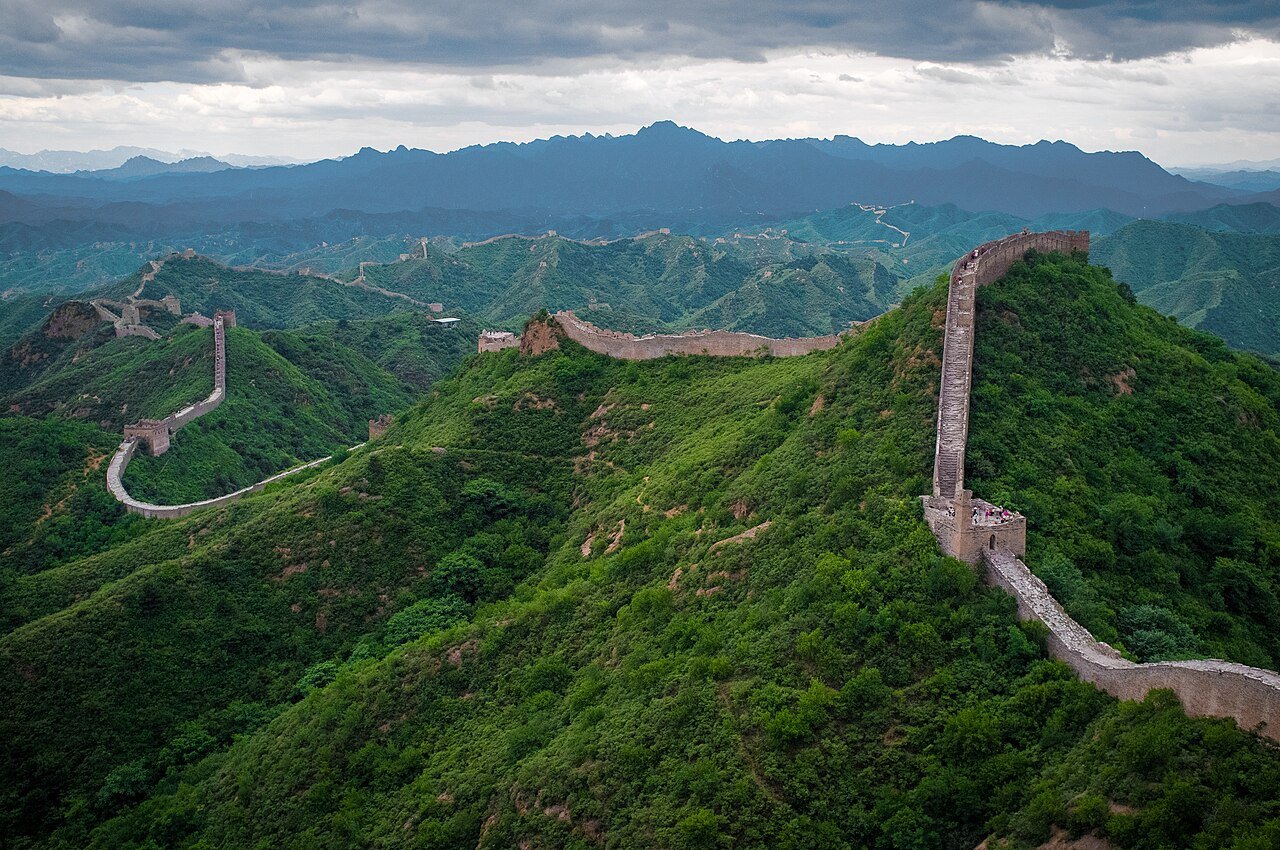
The Great Wall of China stretches across landscapes that rarely fit into a single photograph. Near Beijing, brick towers follow steep mountain ridges. Farther west, weathered earthen defenses belong to a different world of dry plains and desert routes. Together, these remains tell a story of changing borders, military ambition, skilled construction, and demanding labor. This guide follows that story from the walls of early Chinese states to the great fortifications of the Ming dynasty. It explains what the wall was designed to do, how builders adapted it to local conditions, and why its survival raises difficult questions about restoration. For readers planning a journey, it also compares well-known sections and offers practical advice on seasons, walking routes, photography, and responsible visits.
Great Wall of China History, Architecture, and a Complete Visitor Guide
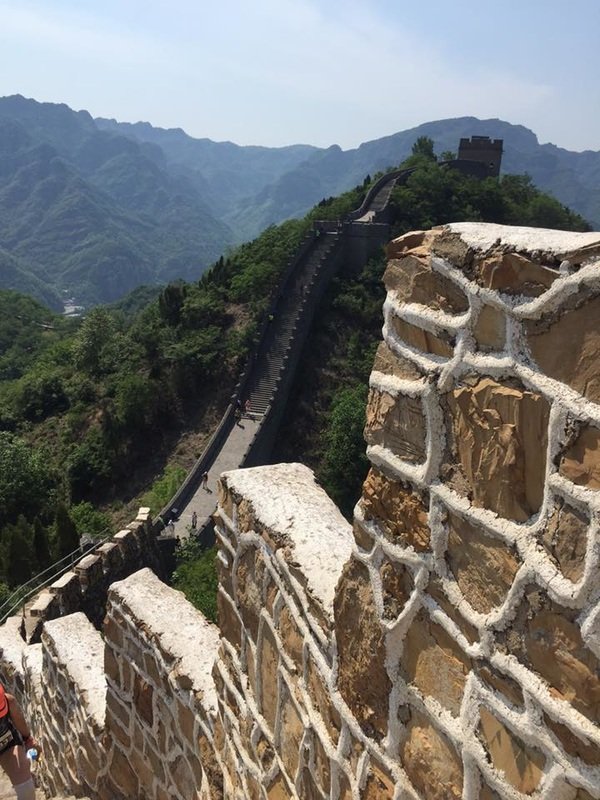
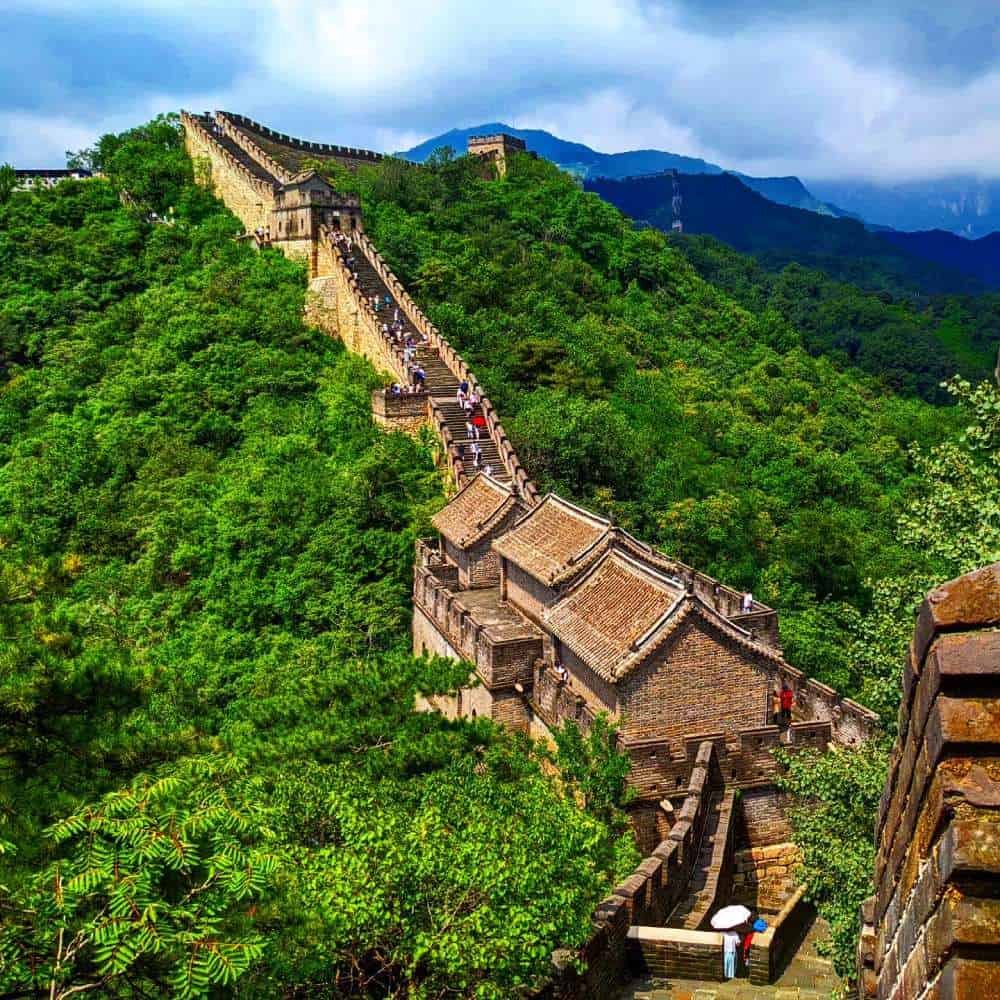
A photograph can make the Great Wall of China look surprisingly simple: a pale line winding over dark hills, interrupted by watchtowers at the highest points. Look more closely, and the apparent simplicity disappears. The route doubles back. A staircase rises sharply toward a tower. Another stretch fades into the distance, leaving you to wonder how anyone carried building materials up there.
That question leads to the real interest of the Great Wall. Its history belongs to the people who planned borders, guarded passes, hauled stone, and lived near the frontier. Its surviving sections record different answers to the same difficult problem: how could a state protect and manage an enormous boundary?
Understanding the wall also changes the way you visit it. A restored walkway near Beijing and a low earthen ruin in western China can both be authentic parts of its history, even when they have little in common visually.
What the Great Wall actually is
The Great Wall is a collection of defensive works built, rebuilt, extended, and sometimes abandoned by different Chinese states and dynasties. Its branches do not form a single uninterrupted path. Walls belong to a wider system of passes, forts, watchtowers, and signaling stations. [1]
Its Chinese name, Changcheng, means Long Wall. The familiar expression Wanli Changcheng is often translated as the Ten Thousand Li Long Wall. That traditional name conveys immense distance; it should not be treated as a modern survey measurement.
Much of the brick-and-stone wall familiar from travel photography dates from the Ming dynasty, which ruled from 1368 to 1644. Earlier defenses often used different materials, and many survive only in fragments. A visitor who sees one restored Ming section has encountered an important part of the story, but only a part. [2]
Where it runs and how long it is?
Great Wall remains extend across northern China through mountains, agricultural country, grasslands, and arid regions. Beijing is the best-known visitor gateway, although substantial remains lie far beyond the capital.
The widely cited total is 21,196.18 kilometres, approximately 13,171 miles. Chinese official reporting associates this figure with Great Wall remains across 15 provincial-level regions. It represents an accumulated historical network, not the distance between two points along one intact wall. [3]
This distinction explains why published lengths differ. A measurement of one dynasty's defences, a description of a principal route, and a survey that includes multiple periods and branches answer different questions. None should be presented without explaining what has been counted.
Shanhaiguan in the east and Jiayuguan in the west are famous reference points in descriptions of the wall. They help you understand its geography, but they shouldn't reduce the entire, complicated network to a simple coast-to-desert line. [1, 2]
Nor does the total length tell you how much can be walked. Some remains are damaged, buried, inaccessible, or closed to visitors. Planning to “walk the whole wall” is therefore very different from following a maintained long-distance trail.
A history built over centuries
The walls before a unified empire
Defensive walls existed before the Qin dynasty united China. During the eras of competing states, rulers fortified their territories against neighboring rivals as well as threats from the northern frontier. These early projects developed separately, shaped by local geography and political needs. [2]
The important point is that wall building already had a history before the emperor most often associated with it. Qin Shi Huang inherited both a construction tradition and earlier fortifications.
Qin Shi Huang and the northern defenses
After unifying China in 221 BCE, Qin Shi Huang ordered work that linked and extended earlier northern defences. UNESCO places this effort around 220 BCE. His role was significant, but calling him the sole builder obscures both what came before and the centuries of work that followed. [1]
The early imperial frontier was defended with materials and methods suited to its location. The tall brick battlements seen in many modern photographs should not be imagined as the Qin wall's standard appearance.
The Han frontier
Under the Han dynasty, which followed the Qin, frontier defences extended farther into the northwest. Fortified routes and garrisons helped secure movement through regions connected with the developing Silk Road trade. Surviving remains around the western frontier reveal how closely defence, transportation, and settlement could be connected. [4]
This history is a reminder that a wall could regulate movement as well as obstruct it. People, goods, and messages still had to cross a frontier. The placement and control of passages mattered as much as the construction between them.
Later dynasties and the Ming rebuilding
Successive dynasties made different decisions about where fortifications were needed. Borders shifted, military priorities changed, and old defenses could lose their usefulness. The wall's history contains interruptions and changes of direction rather than one continuous construction campaign.
The Ming rulers invested heavily in northern defenses. Many surviving masonry sections near Beijing belong to this period, when forts and towers formed part of an extensive military system. The buildings visitors admire today reflect repeated work and repair, rather than one moment when the entire structure was finished. [2, 4]
The fall of the Ming and the Qing period
In 1644, after rebels had taken Beijing, the Ming commander Wu Sangui allied with Manchu forces at Shanhai Pass. Their entry helped bring about Qing rule. The episode is often reduced to the claim that somebody simply opened a gate, but the larger story involves civil conflict, military decisions, and a collapsing dynasty. [5]
As Qing control extended beyond the earlier northern frontier, many old wall defences lost their previous strategic role. Their maintenance and condition changed accordingly. The monument now visited for its history had once depended on an active state to keep it functioning. [4]
Why the Great Wall was built
Walls could slow raids, protect important approaches, and make crossings easier to observe. A barrier forced an attacking force to spend time finding a route, overcoming a defended position, or moving toward a pass. That delay could give nearby troops time to respond.
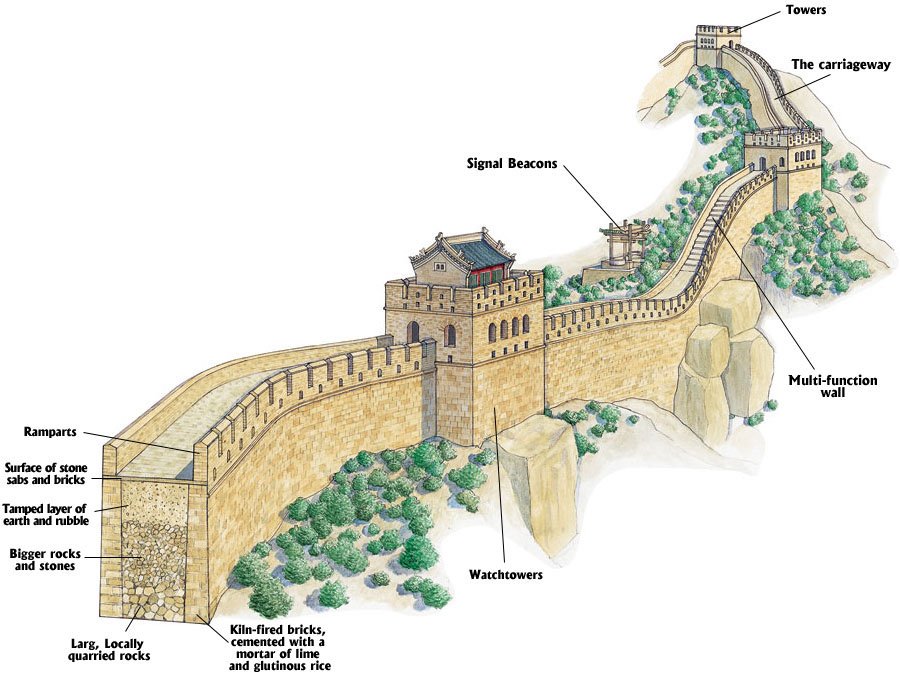
Military communication was equally important. Towers let guards observe the surrounding ground and relay warnings. Signals connected separate positions, helping an army react across distances that a messenger alone would take longer to cover. [6]
The frontier also supported encounters between communities. Trade and diplomacy existed alongside warfare. Treating every northern population as one permanent enemy erases the changing alliances and exchanges that shaped the region.
The wall's effectiveness therefore depended on much more than its height. Troops needed supplies, officers needed information, and governments needed resources. A deserted fortification could not function as a defence system. This helps explain why the wall could be useful without ever guaranteeing absolute protection against invasion.
How builders adapted the wall to the land
Earth, stone, and brick
Construction varied with period and location. Rammed earth was made by compacting layers within temporary forms. Where suitable stone was available, builders could quarry it locally. Western defences sometimes incorporated layers of plant material with earth or gravel. The choice reflected both available resources and the challenge of transporting heavy loads. [6]
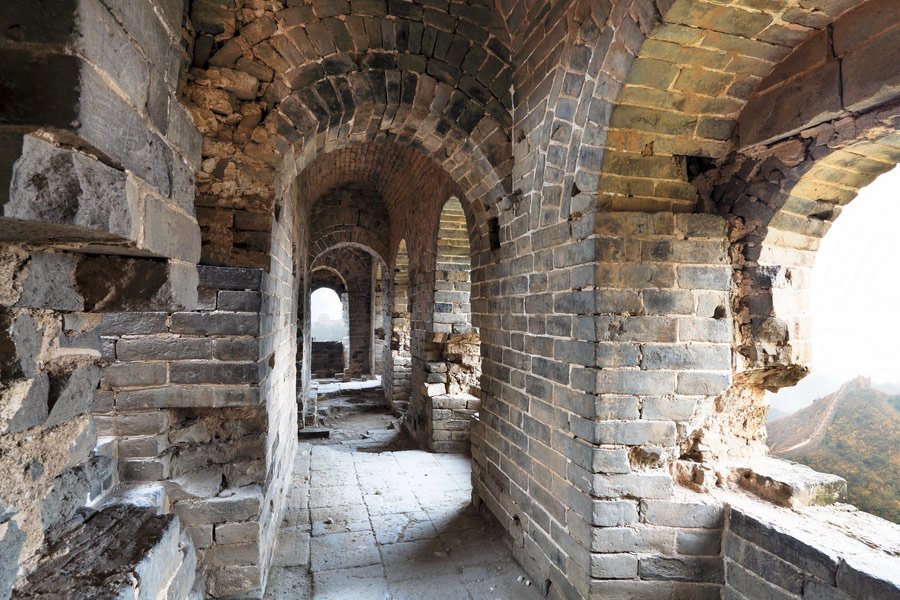
Later masonry works could combine stone foundations, brick facing, and an internal fill. The visible outer surface therefore does not necessarily reveal everything inside a wall. Its strength came from both the arrangement of materials and the materials themselves. [18]
The contrast between an earthen rampart and a brick tower is especially revealing. Each belongs to a particular setting. Judging them only by which looks more impressive misses the practical intelligence behind their construction.
The truth about sticky rice mortar
Sticky rice mortar is a real feature of historic Chinese building technology. Research has examined how amylopectin, a component of sticky rice, interacts with the mineral components of lime mortar. That work helps explain the durability of certain historic masonry mixtures. [7]
It does not justify saying that the entire Great Wall was held together with rice. A structure built across so many regions and centuries cannot be reduced to one recipe. The interesting story is the range of techniques builders developed, including the inventive use of organic ingredients in some traditional mortars.
Following ridges and guarding passes
Mountain ridges offered commanding views and difficult approaches. Valleys and passes concentrated movement. Fortifications took advantage of both, which is why the wall often follows a route that would be exhausting as an ordinary road. [6]
No single height or width describes all its remains. A broad restored walkway near Beijing should not be assumed to be the design for every dynasty and location. Ruins, towers, walls, and pass defences vary in dimension and purpose.
Watchtowers, gates, and the working frontier
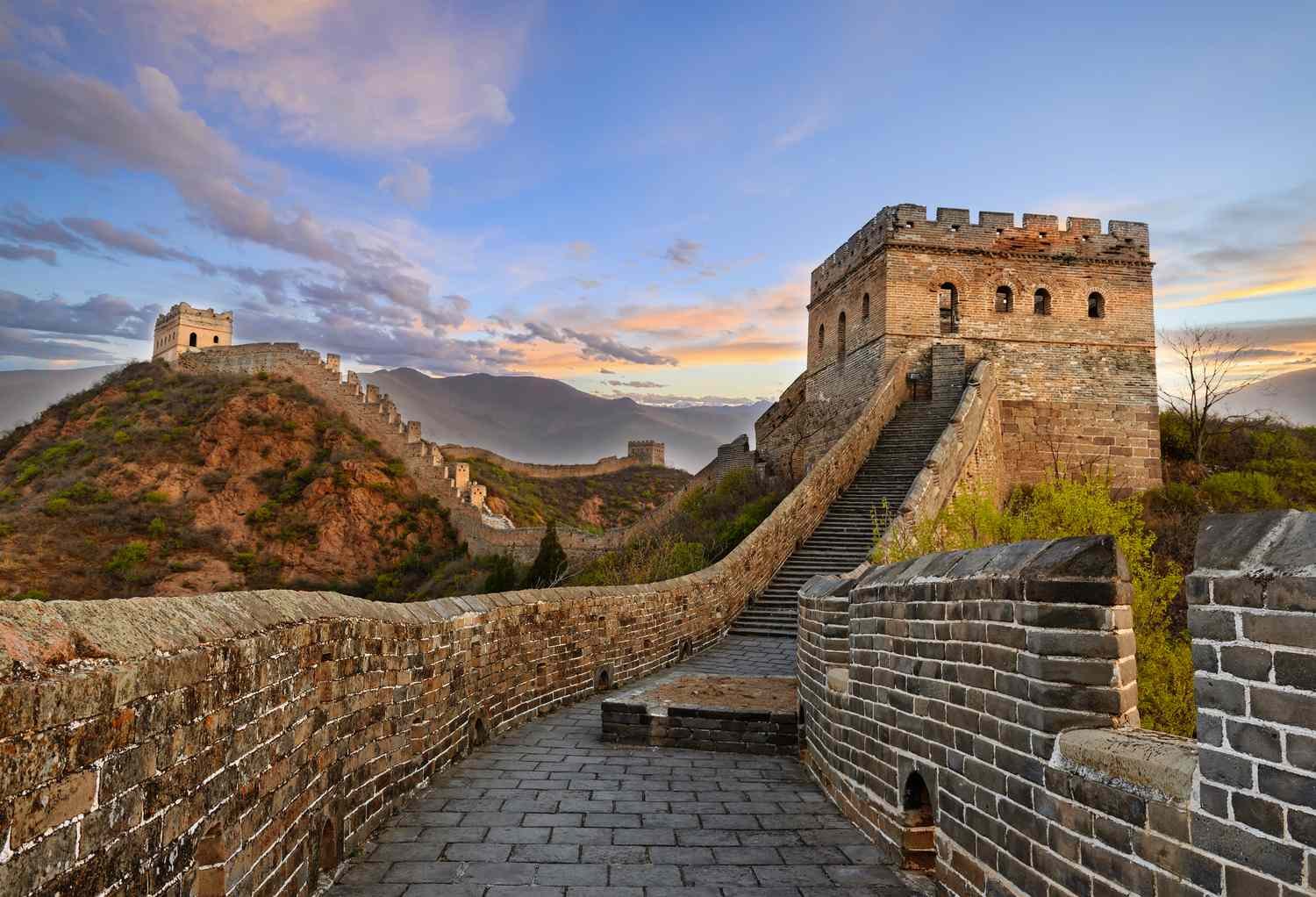
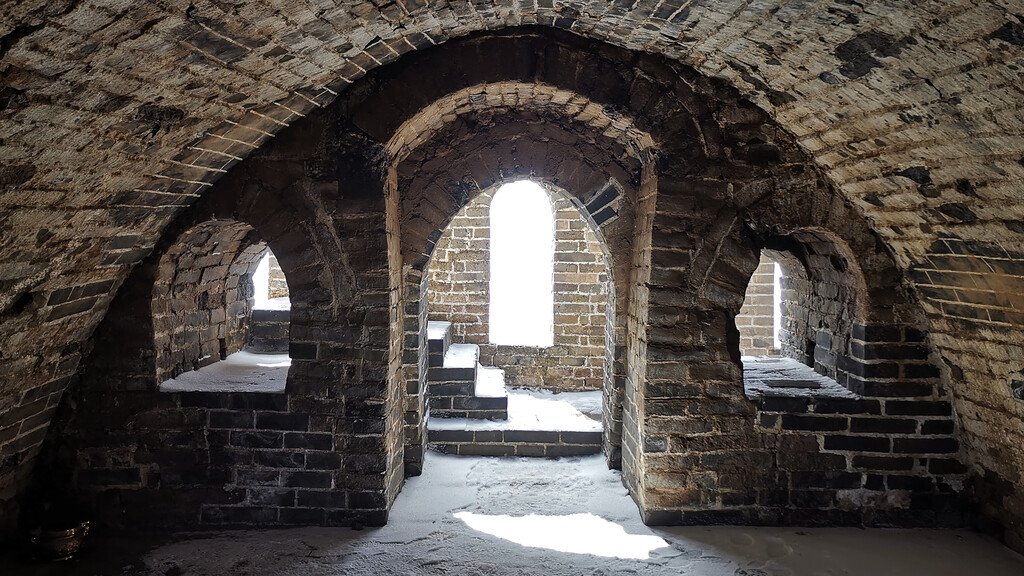
Watchtowers are among the wall's most recognisable features. Their positions allowed observation along ridges and approaches, while enclosed spaces could provide shelter or serve military needs. Towers differed in form; they were not all copies of one design. Battlements and openings gave defenders places to observe and fight. [18]
Passes deserve just as much attention. A gate was a controlled opening in a defensive boundary, so the surrounding fortifications mattered greatly. At major passes, the visitor encounters a fortified complex rather than merely a doorway in a long wall.
It helps to imagine the surrounding activity. A garrison required food, fuel, equipment, and maintenance. Roads and settlements supported construction and military life. The surviving masonry was the durable part of a much larger working landscape. [6]
When you visit, pause at a tower and examine the ground it overlooks. Ask where movement would have been easiest, which approaches were exposed, and how another tower could receive a warning. The landscape begins to explain the architecture.
The people who built it
Emperors issued orders, but soldiers, labourers, and craftspeople carried them out. The workforce varied across periods and included conscripted peasants and people sentenced to forced labour. Construction accounts preserve a history of coercion and hardship alongside technical achievement. [5]
No reliable total exists for everyone who died across the wall's many construction campaigns. Large, precise-looking death tolls circulated online should be treated cautiously. The same applies to claims that bodies were routinely used as construction material.
The legend of Meng Jiangnü gives this suffering a personal form. In a familiar version, a woman searching for her husband learns that he has died while working on the wall; her grief brings down a section of it. Versions differ, and the story belongs to folklore rather than verified construction history. Its endurance reveals how deeply the human cost of monumental building entered cultural memory. [8]
Remembering those workers does not diminish the engineering. It makes the achievement harder to view casually. Every difficult slope also represents labour performed there.
Major sections to know before choosing a visit
Badaling
Badaling, in Beijing's Yanqing District, is a celebrated and extensively developed visitor section. Its substantial walls and mountain setting make the defensive system easy to appreciate. It is a sensible starting point for travelers who value an established sightseeing destination. [9]
Popularity also means that a quiet experience cannot be assumed. Choose your arrival time carefully, and allow room in the day for queues and a slower walking pace. A famous section is worth visiting for what it offers, rather than dismissing it simply because other people want to see it too.
Mutianyu
Mutianyu, in Huairou District, combines wooded scenery with closely spaced towers and distinctive battlements. The official Beijing description lists enclosed cable cars and alpine slides among its visitor facilities. [10]
For many first-time visitors, this makes it a useful option to investigate. However, transport to the wall does not remove the steps and gradients along it. Check where each lift arrives and how far that point is from the stretch you hope to explore.
Jinshanling
Jinshanling lies in Luanping County, Hebei, northeast of Beijing. Its ridgelines and sequence of towers reward visitors who want to study the wall's relationship with the mountains. [11]
I would give this section a full day when traveling from Beijing, rather than fit it between other major attractions. Choose an authorized route suited to your pace. Do not assume that an old online description of a through-hike guarantees that the connection remains open.
Simatai
Simatai is commonly paired with the Gubei Water Town resort area. Official Beijing tourism material also describes night visits, offering a different setting from a daytime mountain walk. [12]
Confirm the current arrangement before booking: the accessible stretch, entry window, transport, and combination tickets can affect the experience. An advertised night visit should not be taken as permission to explore unrestricted sections after dark.
Juyongguan
Juyongguan is valuable for understanding the importance of a fortified pass. Its appeal lies in the relationship between the surrounding heights and the route through them. Visitors interested in military geography should give the pass itself as much attention as the climb. [13]
Shanhaiguan and Jiayuguan
Shanhaiguan in Hebei and Jiayuguan in Gansu offer a broader geographical perspective than the mountain sections around Beijing. Their names recur in historical descriptions of the Great Wall, and their fortified settings help explain why controlling major approaches mattered. [2, 14]
These destinations deserve their own itineraries. Treating the Great Wall as one attraction obscures the distances and regional differences that make it interesting.
Planning a rewarding day on the wall
Choose the section before arranging transport. Start with your priorities: an established sightseeing visit, a longer walk, a pass fortress, or an evening experience. Then check the current official information for that particular destination.
For a first visit from Beijing, a practical plan is to devote most of the day to one section. Leave time for the journey, entry procedures, the climb or lift, several unhurried stops, and the return. The number of towers reached matters less than having enough energy to enjoy the walk back.
Build the budget from separate components. Admission, local shuttle transport, cable cars or chairlifts, and special experiences may have different charges. Read the inclusions before comparing packages, and carry the identification required by the booking provider.
Verify opening hours, final entry, and the final return transport close to your visit. These are different times. Weather and conservation work may also affect access, so a saved screenshot of an old schedule is not enough.
Seasons weather and walking conditions
Around Beijing, spring and autumn often offer appealing conditions for walking. Spring brings fresh growth, although exposed ridges can be windy. Autumn adds changing foliage and cooler temperatures. Summer can be hot and wet; winter can bring striking views alongside cold, ice, and more difficult footing. [15]
Choose for the conditions you can comfortably manage. Photographs of snow-covered battlements may be beautiful, but they do not show how slippery the steps feel. Likewise, green summer hills offer little protection from heat on an exposed walkway.
Wear shoes with reliable grip and carry water. Add sun protection, a weather-appropriate layer, and enough phone battery for tickets and return arrangements. Keep a manageable load; climbing uneven stairs makes an overfilled bag noticeably less appealing.
Visitors with mobility needs should confirm the exact accessible route directly with the attraction. The existence of a cable car does not establish step-free access from arrival to viewpoint. Families and mixed-ability groups should agree on a comfortable turnaround point before anyone becomes exhausted.
Photography with time to look around
The strongest wall photographs often explain its shape. Let a ridge or walkway lead the eye toward a tower, and leave enough surrounding landscape to show the scale. A close view of brickwork can complement the familiar wide panorama.
Look behind you as well as ahead. A stretch that seems ordinary during the climb may form a striking sequence of curves on the return. Waiting for a gap in foot traffic usually works better than trying to force a picture in a narrow passage.
Keep away from parapet edges and leave stairs clear while framing a shot. Use authorized visiting hours for sunrise, sunset, or night photography. For drone use, check the site's current requirements before bringing or launching equipment.
Myths that deserve a second look
The Great Wall is not visible to the unaided eye from the Moon. NASA also explains that observing it from Earth orbit is difficult or impossible without favourable circumstances and optical assistance. Photographs taken with powerful lenses or remote-sensing instruments do not prove the popular naked-eye claim. [16]
No single emperor built it, and its famous masonry sections are not all more than two thousand years old. Nor was it an impenetrable barrier. These corrections make its history more interesting by revealing the changes, repairs, and human decisions hidden by simpler stories.
Another misconception concerns appearance. A restored section may preserve historic fabric while including later repairs. An unrestored ruin is not necessarily safe to visit, and a neat-looking tower is not necessarily untouched. Understanding what has survived and what has been repaired is part of understanding the site.
Protecting what remains
UNESCO designated the Great Wall as a World Heritage Site in 1987. Its conservation involves an unusually large and varied heritage landscape, including fragile remains far from busy attractions. UNESCO identifies inappropriate tourist development as a threat to the authenticity of its setting. [1]
Chinese conservation initiatives also address the challenge of coordinating protection across many jurisdictions. Remote remains need attention even when they lack the visitor income or public visibility of a famous Beijing section. [3, 17]
For visitors, the useful actions are straightforward: stay on permitted routes, leave bricks and fragments where they belong, avoid graffiti, and respect closures. A small loose piece is still part of the historical evidence. Taking it home removes it from the place where it can be understood.
The most memorable encounter with the wall may come after the photograph, when you stop moving for a moment. From a tower, the next ridge can appear close enough to reach quickly, until you notice the descent and the long climb beyond it. That change in scale brings the old problem into focus. Someone had to build there, carry supplies there, and keep watch there. The landscape makes those distant lives a little easier to imagine.
Frequently Asked Questions
How long is the Great Wall of China?
The widely cited total is 21,196.18 kilometres, about 13,171 miles. This figure describes a historical network across different periods and regions, not one continuous, intact walking route. Figures for a particular dynasty or section will be smaller. [3]
Who built the Great Wall of China?
Different Chinese states and dynasties built it over centuries. Qin Shi Huang directed the linking and extension of earlier northern defences, while the Ming rulers commissioned many of the masonry sections familiar today. Soldiers, labourers, and craftspeople built it. [2, 5]
How old is the Great Wall?
Its origins lie in defensive works built before China's unification in 221 BCE. Surviving sections vary in age, and many famous brick-and-stone stretches date to the Ming period (1368 to 1644). No single age applies to the entire network. [2]
Why was the Great Wall built?
Its principal purpose was frontier defence. Walls, fortified passes, and signalling stations helped monitor approaches, slow hostile movement, and support military responses. Their usefulness depended on troops, supplies, and effective command. [6]
Can you see the Great Wall from space?
The familiar claim is misleading. It cannot be seen with the unaided eye from the Moon, and it is difficult to distinguish from Earth orbit. Images made with powerful lenses or specialized sensors are different from ordinary human vision. [16]
Which section should a first-time visitor choose?
Badaling and Mutianyu are useful options to compare because they have established visitor facilities. Jinshanling may appeal more if your priority is an extended mountain walk. Choose according to your mobility, available time, transport, and the routes currently open. [9–11]
What is the best time to visit?
Spring and autumn are often comfortable choices around Beijing. Summer requires preparation for heat and rain, while winter calls for particular attention to cold and slippery surfaces. The local forecast and current access conditions matter more than a general seasonal recommendation. [15]
How much time should I allow?
For a visit from Beijing, set aside most of a day for one section, including travel. On the wall, choose a route that leaves time for breaks and a comfortable return. A longer or more remote outing needs a separate transport and walking plan.
Can children and older travelers visit?
Many can enjoy an appropriately chosen route, but ability and stamina matter more than age alone. Investigate lifts and accessible viewpoints, confirm remaining stairs, and keep the plan flexible. A shorter visit can be just as rewarding as a demanding climb.
Can you walk the entire Great Wall?
No continuous, fully maintained trail covers the whole historical network. Some remains are fragmented, inaccessible, or closed. For ordinary travel, choose authorised sections rather than treating the survey length as a route you can follow from end to end.
Sources and editorial notes
Sources checked 12 October 2026. Site access and visitor arrangements can change. Numbered references support the related paragraphs and FAQs; practical itinerary suggestions are editorial recommendations.
[1] UNESCO World Heritage Centre — The Great Wall. https://whc.unesco.org/en/list/438/
[2] State Council Information Office — Great Wall. https://english.scio.gov.cn/chinafacts/2017-04/13/content_40613789.htm
[3] State Council Information Office — China builds alliance to protect Great Wall. https://english.scio.gov.cn/chinavoices/2018-06/08/content_51805883.htm
[4] World History Encyclopedia — Great Wall of China. https://www.worldhistory.org/Great_Wall_of_China/
[5] HISTORY — Who Built the Great Wall of China. https://www.history.com/articles/great-wall-china-builders
[6] Education About Asia — Building the Great Wall, Kurt Jacobs and Pat Burleson. https://www.educationaboutasia.org/article/id/141/
[7] Accounts of Chemical Research — Study of Sticky Rice–Lime Mortar Technology for the Restoration of Historical Masonry Construction. https://pubmed.ncbi.nlm.nih.gov/20455571/
[8] University of Washington Press via JSTOR — Meng Jiangnü Brings Down the Great Wall: Ten Versions of a Chinese Legend. https://www.jstor.org/stable/j.ctvcwnjwg
[9] Beijing Municipal Government — Badaling Great Wall. https://english.beijing.gov.cn/travellinginbeijing/attractions/202603/t20260320_4562521.html
[10] Beijing Municipal Government — Mutianyu Great Wall. https://english.beijing.gov.cn/travellinginbeijing/attractions/202603/t20260325_4566115.html
[11] Visit Beijing — Jinshanling Great Wall. https://english.visitbeijing.com.cn/article/47ONjF1Ulh6
[12] Beijing Municipal Government — Some Romantic Ideas for a New Year Getaway in Beijing. https://english.beijing.gov.cn/consuminginbeijing/news/202512/t20251229_4373811.html
[13] Beijing Municipal Government — Juyongguan Great Wall. https://english.beijing.gov.cn/travellinginbeijing/attractions/202603/t20260320_4562519.html
[14] Tourist Office of the People's Republic of China — Great Wall. https://www.china-tourism.de/en/discover/great_wall/
[15] Visit Beijing — Great Wall Tour Tips. https://english.visitbeijing.com.cn/article/47ONNrc7GTz
[16] NASA — Great Wall. https://www.nasa.gov/image-article/great-wall/
[17] State Council of the People's Republic of China — China to step up conservation of Great Wall. https://english.www.gov.cn/news/202312/08/content_WS65731632c6d0868f4e8e2027.html
[18] The Cultural Heritage of China, hosted by ibiblio — The Great Wall Construction. https://www.ibiblio.org/chineseculture/contents/hert/p-hert-c01s02.html
Publisher note: Meta keywords are included as requested. Avoid repeating them unnaturally in the article. Retain the distinction between historical facts and travel recommendations when adapting the text for your website.