The Colosseum is one of the clearest surviving expressions of Roman power. Its immense exterior promised public entertainment on an unprecedented scale, while its seating arrangements made the divisions of Roman society visible to everyone inside. Beneath the arena, workers operated machinery that brought animals and scenery into view. Nearly two thousand years later, the ruin reveals a different story: earthquakes, reused stone, medieval occupation, religious devotion, and the patient work of conservation. This article examines how the amphitheatre was built, what happened within it, and why familiar stories about gladiators and spectacular performances need careful handling. It also provides a practical guide to the main visitor experiences, nearby archaeological sites, and planning decisions that can make a visit more rewarding.
The Colosseum and the Story of Ancient Rome
The Colosseum is one of the clearest surviving expressions of Roman power. Its immense exterior promised public entertainment on an unprecedented scale, while its seating arrangements made the divisions of Roman society visible to everyone inside. Beneath the arena, workers operated machinery that brought animals and scenery into view. Nearly two thousand years later, the ruin reveals a different story: earthquakes, reused stone, medieval occupation, religious devotion, and the patient work of conservation. This article examines how the amphitheatre was built, what happened within it, and why familiar stories about gladiators and spectacular performances need careful handling. It also provides a practical guide to the main visitor experiences, nearby archaeological sites, and planning decisions that can make a visit more rewarding.
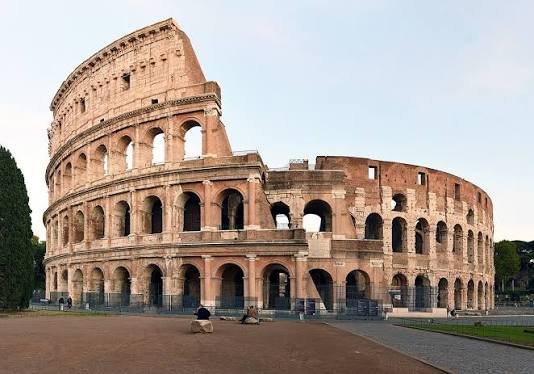
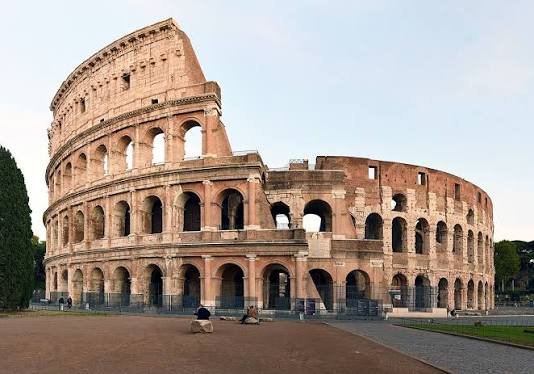
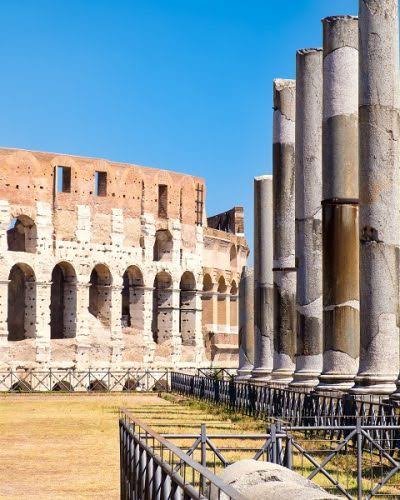
The Colosseum is easy to recognize before you have ever been to Rome. Its broken outer wall appears on postcards, travel advertisements, and film posters. Yet that familiar silhouette can hide how unusual the building is. Walk around it and its appearance changes: one side rises in ordered tiers, while another exposes the structure behind the seating. Inside, the arena floor is largely gone, revealing spaces spectators were never meant to see.
Those gaps make the Colosseum especially interesting. They show how a place designed to control what an audience saw has become a place where visitors examine what lay behind the performance.
Its story includes outstanding construction and disturbing uses. Skilled engineering enabled public spectacles in which people and animals suffered. Later generations lived among its walls, removed its materials, made it a sacred place, and worked to preserve it. Understanding those different lives gives the monument far more depth than a list of impressive measurements.
What the Colosseum is and where it stands
The Colosseum is an ancient Roman amphitheatre in central Rome, Italy, immediately east of the Roman Forum. It is also known as the Flavian Amphitheatre because the emperors of the Flavian dynasty built it. Today it belongs to the Parco archeologico del Colosseo, which also manages the Forum and Palatine archaeological areas. [1]
An amphitheatre places spectators around a central arena. That arrangement differs from the semicircular auditorium and stage of a Roman theatre. It also differs from the long racing course of a circus. The Colosseum is best known for gladiatorial contests and animal spectacles; Rome’s famous chariot-racing venue was the Circus Maximus.
The building sits in a valley between major hills in ancient Rome. Its location is part of its meaning. This was a major public monument inserted into the heart of the imperial city, where entertainment, politics, and urban identity were closely connected.
Who built it and when it opened
Work began under Emperor Vespasian in the early 70s CE. Modern accounts date it to about 70 or 72 CE, depending on how they describe the project's beginning. His son Titus inaugurated the amphitheatre in 80 CE. Domitian, who succeeded Titus, continued its development. [2, 3]
That sequence matters because the Colosseum was not handed over in its final, unchanging form on opening day. Its equipment and internal arrangements evolved, and subsequent emperors repaired and modified the building.
Ancient accounts describe an extended inaugural celebration under Titus, traditionally given as one hundred days. The scale of these festivities advertised the emperor's resources. A new building could express authority before anyone read an inscription: tens of thousands of spectators gathered in a structure the ruling dynasty built for their use. [3]
The emperors’ names survive more clearly than those of the people who designed and constructed it. No single architect can be identified with confidence. The workforce and its organisation should not be reduced to unsupported online claims about an exact number of enslaved builders.
Why the site of Nero’s lake mattered
Before the amphitheatre, this part of the city contained an artificial lake associated with Nero’s enormous palace estate, the Domus Aurea. The Flavian building program filled the lake and established the Colosseum on its site. [4]
The change carried a clear political message. Land associated with an emperor’s private luxury became a setting for public gatherings. The new dynasty could present itself as giving something back to Rome while placing its own generosity on permanent display.
That was not the same as modern democratic public space. The emperor remained the occasion's sponsor and central figure, and the audience was carefully ranked. Nevertheless, the contrast between a private palace landscape and a public amphitheatre would have been powerful.
The project’s financing also belongs to the history of conquest. A reconstructed dedicatory inscription records construction funded by war spoils. Scholars connect these proceeds with the Flavian victory in Judaea and the sack of Jerusalem. This provides evidence of the project’s connection to imperial warfare, rather than a complete surviving account of its budget. [5]
How the Colosseum acquired its name
The name Colosseum is generally connected with the colossal statue originally made to represent Nero. People later associated the statue with the sun god, and it stood near the amphitheatre. Over time, the name linked to that enormous figure came to identify the building itself. [6]
It is tempting to assume the monument was named simply for being colossal. Its size certainly makes that explanation plausible, but the usual historical account links it to the nearby statue.
The two names therefore point toward different histories. Flavian Amphitheatre identifies the dynasty responsible for construction. Colosseum recalls another feature of the surrounding city, one that has largely disappeared while the building survived.
Its size and the problem of exact capacity
Rome’s official tourism authority gives dimensions of approximately 189 metres long, 156 metres wide, and more than 48 metres high. These figures describe the overall structure, not just the central arena. [2]
The audience numbered tens of thousands. Around 50,000 is a useful commonly cited estimate, although larger capacities appear in other accounts. Seating arrangements changed, and reconstructing how densely people occupied the upper levels introduces uncertainty. Presenting one number as an exact turnstile count would be misleading.
Even without a definitive capacity, the organizational challenge is clear. Thousands of people had to reach the correct areas, watch the same performance, and leave through a limited physical structure. The Colosseum’s architecture addressed those movements as carefully as it framed the arena.
Reading the architecture from the outside
Arches and the classical orders
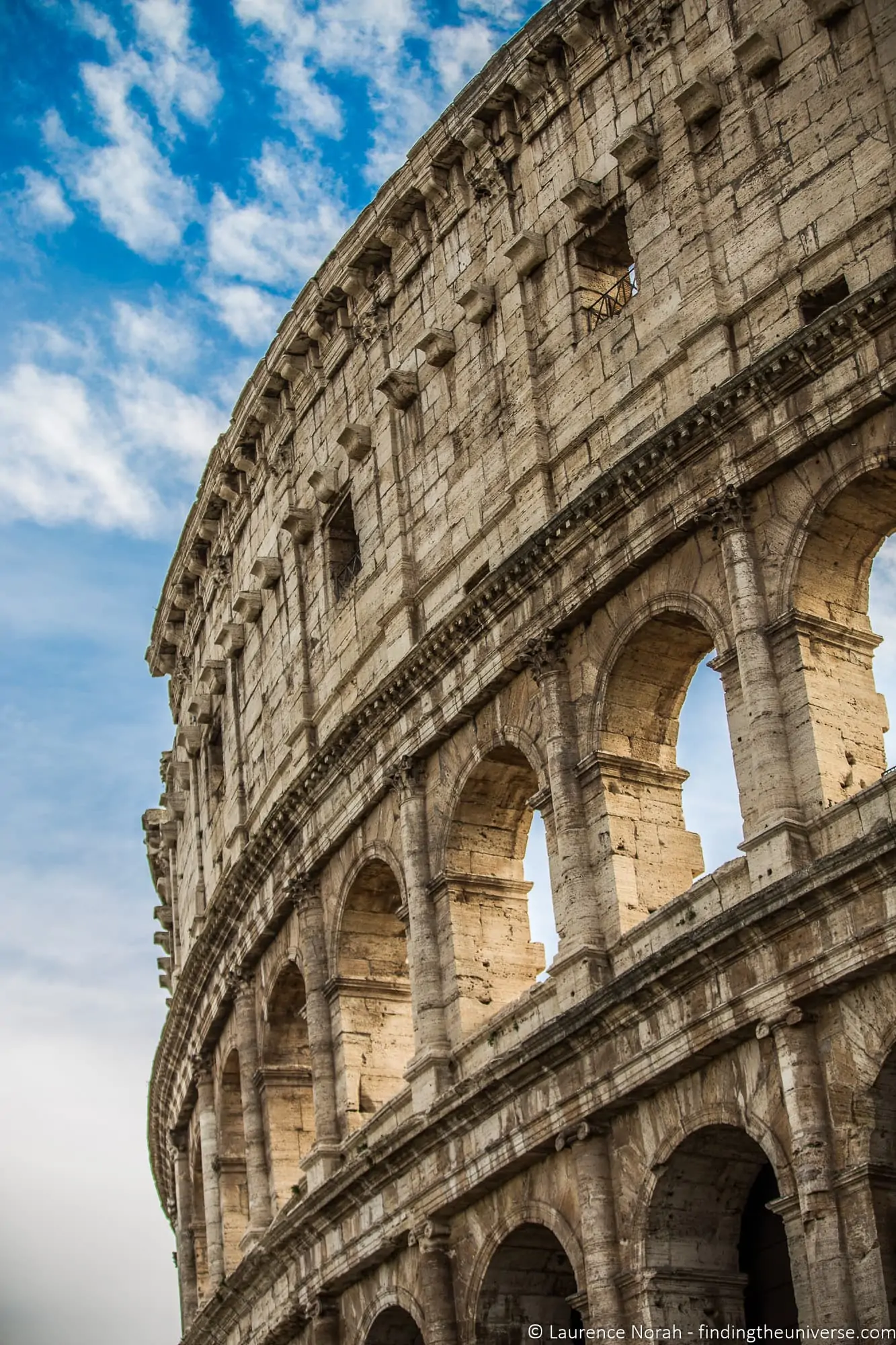
The surviving exterior has three levels of arcades beneath a more solid upper storey. Attached columns frame the arches: Tuscan at the lowest level, Ionic above, and Corinthian on the third. The upper storey uses pilasters and smaller openings. [7]
You do not need to know the names of the orders to notice the effect. The repeating arches establish a strong rhythm, while the changing capitals introduce variation as the eye moves upward. A very large building becomes readable through repeated parts.
The columns and the arches also do different visual work. The columns give the façade a familiar classical language; the arches reveal the practical system of openings and support. Looking at both together helps explain how decoration and engineering combine.
Stone, concrete and the structure behind the seats
Travertine, volcanic tuff, and brick-faced concrete all contributed to the structure. Different materials served different positions and purposes. The pale exterior should not be mistaken for evidence that the entire amphitheatre was carved from one kind of stone. [7]
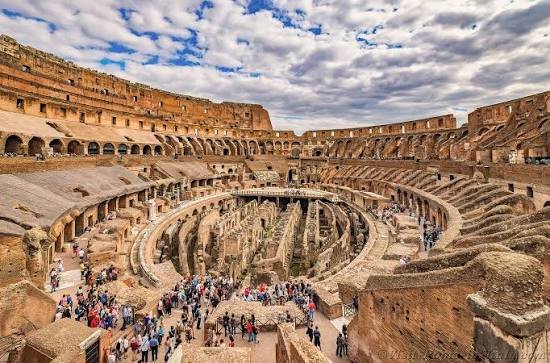
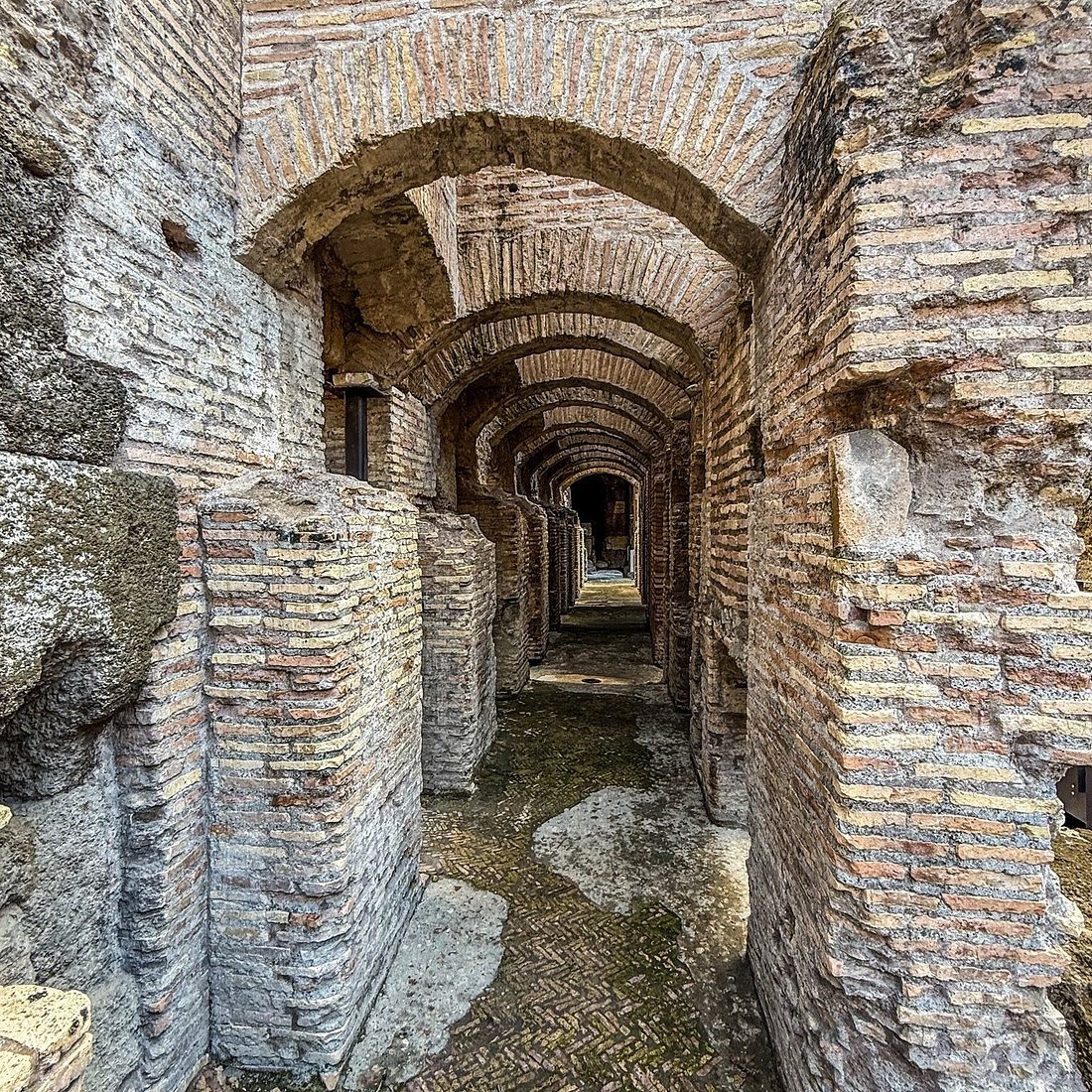
Inside, corridors and vaulted spaces supported and served the seating above. The building was effectively a large arrangement of circulation routes beneath a sloping auditorium. Its ruined condition makes parts of that arrangement easier to understand today.
The missing finishes matter too. Ancient spectators encountered a more decorated building than the exposed masonry suggests. Surviving stucco at the northern entrance, for example, preserves evidence of ornament on vaulted surfaces. Conserving these traces helps recover the appearance of a place never intended to look like a bare ruin. [8]
Seating as a map of Roman society
The seating area, known as the cavea, expressed status distinctions. Privileged spectators occupied favoured positions close to the arena, while other groups sat higher and farther away. The emperor and key religious and political figures occupied especially prominent seats. [9]
A seat was therefore more than a good or bad view. It identified where a person belonged in the social order. Gathering a large public inside the same building did not make its members equal.
Numbered entrances helped spectators find their assigned sectors. The archaeological park identifies 76 numbered entrance arches used by the different social classes. Routes, stairs, and barriers divided the crowd as people moved toward their places. [10]
The passages called vomitoria are sometimes misunderstood. They were access passages serving the seating, not rooms set aside for vomiting. Surviving barriers and balustrades also show how movement was directed and falls prevented. Practical crowd management and social hierarchy were built into the same circulation system. [11]
For a visitor, this is worth remembering when looking toward the arena from different levels. The distance was part of the ancient experience, and it was distributed unevenly.
Shade above the spectators
The Colosseum did not have a solid roof across the arena. A large awning system, the velarium, shaded portions of the spectator area. Its rigging required specialized handling, associated with sailors from the imperial fleet. [12, 13]
It should not be imagined as a modern retractable stadium roof with an equally enclosed interior. The open sky remained central to the building’s appearance and atmosphere.
The awning also reminds a how much of the amphitheatre has disappeared. Ropes, timber, fabrics, and other working materials were essential to the experience, yet stone survives far more readily. Reconstructing the building means considering those missing elements as well as the visible walls.
The arena floor and the world beneath it
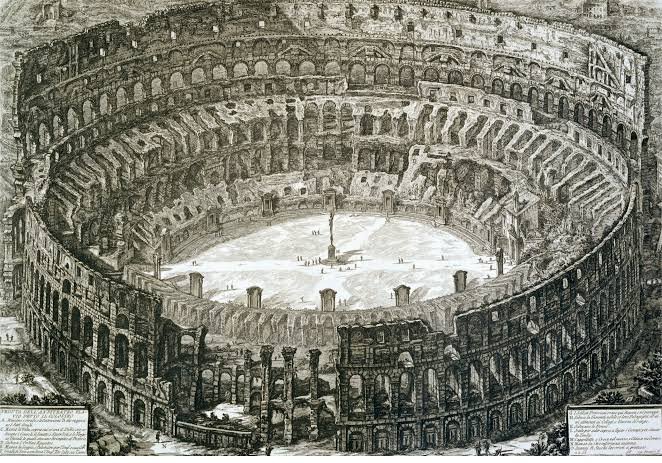
The ancient arena had a wooden floor covered with sand. Beneath it lay the hypogeum, the system of passages and working spaces that helped stage the spectacles. The extensive underground masonry now visible was once concealed from the audience. [14]
The park’s account describes early wooden installations followed by masonry construction under Domitian. Equipment changed over the building’s life. Hoists, platforms, and trapdoors let animals and scenery reach the arena, turning hidden preparation into a sudden appearance for spectators. [15]
This was a labour-intensive operation. Machines needed people to supply the force, coordinate movements, and prepare what would happen above. The surviving slots, corridors, and structural remains show both labour and invention.
The hypogeum also changes the visitor’s perspective. From above, it can look like a maze. Explaining the different routes and mechanisms turns the apparent confusion into a system designed around a particular purpose.
Where a reconstructed arena surface is accessible, it helps restore the relationship between performer and audience. Looking upward from that level conveys something that an exterior photograph cannot: the sheer amount of seating directed toward the person standing below.
Gladiators and the organization of combat
Gladiators came from different circumstances. Some were enslaved or prisoners of war; others became gladiators as free men. Their status, prospects, and freedom of choice varied. The nearby Ludus Magnus, founded under Domitian, was a major training establishment connected with the amphitheatre. [16]
Combat involved recognisable fighting categories rather than an undifferentiated crowd swinging swords. Equipment created different advantages and vulnerabilities. The retiarius, for example, fought with a net and trident and relied on mobility against a more heavily protected opponent. [13]
The spectacle combined danger with training and rules. Officials could supervise a bout, and a defeated fighter might receive a reprieve. Not every contest necessarily ended in death. That qualification corrects a familiar film image without making the profession safe or the institution humane.
Fame was possible, but fame did not erase coercion or legal disadvantage. A fighter admired by the crowd could still have very little control over his life. The contradiction is part of what makes gladiatorial history difficult to fit into a simple story of sporting heroes.
Nor should every person exposed to violence in the arena be called a gladiator. Trained combatants, animal hunters, and condemned prisoners participated in different kinds of events under very different conditions.
Animal spectacles and public punishment
Animal hunts, often called venationes, formed another major category of amphitheatre entertainment. Staging them required obtaining animals, moving them long distances, and managing them before an audience. They displayed the empire's reach and resources, as well as the performers' skill. [1, 13]
The arena could also host executions. These punishments became public spectacles, sometimes with theatrical elements. Treating all such events as games conceals the difference between a trained participant and a person condemned to die. [14]
The engineering deserves admiration, but its purpose deserves scrutiny. The same mechanisms that seem ingenious in a reconstruction helped make violence more surprising and entertaining. Both facts belong in an honest account of the building.
Exact totals for all the people or animals killed in the Colosseum are not securely documented. Numbers repeated across travel websites often imply a certainty that the surviving evidence cannot provide. The scale of suffering does not need an invented total to be taken seriously.
Did the Romans flood the Colosseum
Ancient writers describe aquatic spectacles associated with the amphitheatre’s early history. Modern historians debate their scale, staging, and how to interpret those accounts. Rome also had other locations designed for mock naval battles, so descriptions of Roman water spectacles should not automatically be assigned to the Colosseum. [17]
The building changed over time. A claim about an early event cannot simply be transferred to a later period when permanent underground installations occupied the space beneath the arena.
The careful answer is that ancient accounts support a history of early aquatic displays, while their practical arrangement remains debated. Huge sea battles complete with cinematic marine predators are not a reliable reconstruction of the evidence.
Christianity and the later sacred monument
The Colosseum has a strong association with Christian martyrdom, but evidence for particular executions there is far less secure than popular tradition suggests. Historians distinguish the reality of Roman persecution from identifying this specific building as the setting for familiar stories. [18]
Nero, in particular, could not have persecuted Christians inside the completed Colosseum: he died before it was built. His reign belongs to the site’s earlier palace landscape.
The building’s later Christian meaning is well documented. Papal projects sought to consecrate and protect the monument. For the Jubilee of 1750, Benedict XIV dedicated the arena to the memory of Christ’s Passion and the Christian martyrs and commissioned Stations of the Cross. [19]
This later religious history deserves attention on its own terms. A place can acquire profound significance centuries after its original use, even when the traditions attached to it exceed what can be established about antiquity.
How the amphitheatre became a ruin
The Colosseum did not collapse in one event at the end of the Roman Empire. Repeated damage, changing uses, and the removal of materials over a long period shaped its condition.
Ancient spectacles ended gradually. The park identifies a final documented spectacle in 523 CE; this should not be confused with a date for the last gladiatorial combat, since different forms of entertainment ended at different times. [15]
Medieval Rome used the surviving structure for other purposes. The Frangipane family established a fortress within it, documented from the twelfth century. The building’s height and commanding position now served urban defense and competition between powerful families. [20]
Earthquakes and unstable ground contributed to the loss of the outer structure, especially on the southern side. Fallen and standing material became a source of stone for other projects. Reuse and destruction shaped the ruin. [21]
Later protection, excavation, and repair helped preserve what remained. The building you see today contains evidence of Roman construction, later interventions, and modern conservation. Learning to recognize that mixture is more useful than searching for an entirely untouched monument.
What to look for during a visit
Begin outside and walk far enough around the perimeter to see the difference between the surviving façade and the more exposed side. Notice how a complete outer wall would have changed your view of the interior.
Inside, take time to understand the basic arrangement before focusing on details. Locate the arena, the underground passages, the rising seating, and the corridors behind it. Once those relationships are clear, individual fragments become easier to interpret.
The Colosseum Museum adds context through objects and displays. Small finds can make the enormous structure feel more personal. Evidence of spectators’ daily behavior reminds you that the crowd was made up of individuals rather than a single anonymous mass. [22]
If you book the underground, concentrate on its working functions. If you visit the arena or upper levels, compare the viewpoints. Each route answers a different question about how the building operated.
Choosing tickets and booking the right experience
Start with the archaeological park’s official website, colosseo.it, and follow its link to ticketing.colosseo.it. Check the current product description before payment. A ticket labeled Colosseum does not necessarily include every area. [23]
The standard 24-hour Colosseum, Roman Forum and Palatine option covers specified general visitor levels of the amphitheatre and the associated archaeological areas; it does not include the arena floor. The 24h Only Arena product has a different, limited Colosseum route. Full Experience products distinguish arena, underground, and attic access. [23–25]
Do not assume that a higher-priced package automatically contains everything. Read the included areas, visit duration, meeting point, guide arrangements, and validity period. A tour sold by an independent company may combine services differently from an official admission product.
Book according to the experience you want. General entry may be enough for a first encounter with the building. Underground access adds operational history; an upper-level visit emphasizes scale and views. A knowledgeable guide can make either more informative, but the guide’s itinerary should match the ticket you purchase.
Confirm identification requirements and arrive with the documents stated in your booking. Allow time for security and finding the correct entrance. Timed admission does not remove those steps.
Prices, routes, and availability can change. Rather than rely on a copied price list, use the official booking page for the date of your visit. The park also changed on-site ticket sales in May 2026, so check the latest instructions. [26]
Planning your time and comfort
For a first visit, reserve enough space in your itinerary to move slowly and read the displays, while observing any duration limit attached to your ticket. If you also plan to explore the Forum and Palatine, treat the combined outing as a substantial part of the day.
Avoid placing an inflexible appointment immediately after a guided route. Meeting procedures, walking distances, and the size of the archaeological area make tightly packed schedules less enjoyable.
Much of the experience involves standing and walking. Comfortable shoes, water, and appropriate sun or rain protection matter more than dressing for a photograph. During hot weather, plan rest breaks and avoid overloading the day with exposed outdoor sites.
For wheelchair users or visitors who find stairs difficult, confirm the precise route and lift arrangements with the park before booking. General accessibility information does not guarantee that every specialized route suits every visitor. The same approach helps families with pushchairs and people who need a slower pace.
Early or later entry may suit your personal schedule, but no time guarantees an empty monument. Choose a manageable itinerary and leave room to look around, rather than treating the visit as a race to get to photo spots.
The Forum Palatine and nearby monuments
The Roman Forum gives the Colosseum a civic setting. Its temples, public buildings, and ceremonial spaces reveal aspects of Roman life beyond the arena. The Palatine adds the world of imperial residences and elevated views over the archaeological landscape. [27]
Nearby, the Arch of Constantine belongs to a much later phase of imperial Rome than the amphitheatre. The Arch of Titus, within the Forum area, offers a closer connection to the Flavian dynasty: its reliefs commemorate victory and show spoils taken from Jerusalem. [28]
The remains of the Ludus Magnus help connect the spectacle with the training and accommodation behind it. Consider these neighboring places as parts of a working city, while checking their separate access arrangements rather than assuming one booking opens every door.
Preservation and the Colosseum today
The Colosseum forms part of the UNESCO World Heritage property centered on historic Rome. The inscription covers a much wider urban and cultural landscape, rather than a separate listing the amphitheatre separately. [29]
Conservation continues to shape what visitors can understand. A recent project on the southern side marks the positions of missing structures in new paving, helping explain the vanished outer corridors without rebuilding them to full height. [21]
That approach illustrates a central conservation question: how can a ruin be made readable while preserving the evidence that survives? Interpretation can help restore an idea of the building without pretending that new work is ancient.
Visitors contribute by respecting barriers, leaving surfaces unmarked, and allowing maintenance work to proceed. The Colosseum has survived because generations made different choices about it. Its future depends on choices too.
Before leaving, look once more at the arena from above. The view brings several histories together: the seats where Rome watched, the floor that once hid the machinery, and the exposed spaces that now attract the visitor’s attention. What was concealed has become part of the story. That reversal is one reason the Colosseum remains so compelling.
Frequently asked questions
Where is the Colosseum?
The Colosseum stands in central Rome, Italy, beside the Roman Forum and near the Palatine Hill. It is part of the Parco archeologico del Colosseo. Plan your arrival around the entrance specified on your ticket. [1]
Who built the Colosseum?
Emperor Vespasian commissioned it, Titus inaugurated it in 80 CE, and Domitian continued its development. These rulers belonged to the Flavian dynasty. The identity of a single architect is not securely known. [2, 3]
How old is the Colosseum?
The amphitheatre opened in 80 CE, making it nearly two thousand years old. Construction began in the early 70s CE, and later modifications and repairs mean that its surviving parts do not all date from the same year. [2]
Why is it called the Colosseum?
The name is generally linked to the colossal statue originally representing Nero that later stood nearby. Flavian Amphitheatre is the name that connects the monument to the dynasty responsible for building it. [6]
How many people could it hold?
Around 50,000 spectators is a commonly cited estimate, although larger figures also appear. Capacity depends on how the seating is reconstructed and which period is considered. It is safest to describe the audience as numbering tens of thousands. [2, 9]
Did every gladiator fight end in death?
No. Trained gladiators could survive defeat and receive a reprieve. However, combat remained dangerous, and many participants lived under coercive conditions. Gladiatorial bouts should also be distinguished from executions and animal spectacles. [13, 16]
What is underneath the arena?
The hypogeum contains passages and working spaces associated with the preparation of spectacles. Machinery raised animals and scenery to the floor above. Its layout and equipment changed during the amphitheatre’s history. [15]
Was the Colosseum used for naval battles?
Ancient accounts describe early aquatic displays, but their exact staging and scale remain debated. Later permanent underground structures changed what could be done beneath the arena. Film scenes should not be treated as archaeological evidence. [17]
Does a regular ticket include the underground?
No. Underground access requires a product that specifically includes it. Standard entry, arena-only access, and different Full Experience routes have distinct inclusions. Read the official ticket description for your chosen date before booking. [23–25]
Is the Colosseum worth visiting inside?
Yes, if you want to understand how it worked. The interior reveals the relationship between the arena, seating, corridors, and underground spaces. The exterior is impressive, but it cannot explain those connections on its own.
Sources and editorial notes
Sources checked 12 October 2026. Visitor products and access arrangements may change. Numbered references support historical and operational claims; itinerary and photography suggestions are editorial recommendations.
[1] Parco archeologico del Colosseo — The Colosseum. https://colosseo.it/en/area/the-colosseum/
[2] Turismo Roma — The Flavian Amphitheatre. https://turismoroma.it/en/node/1155
[3] HISTORY — Colosseum. https://www.history.com/articles/colosseum
[4] Smarthistory — The Domus Aurea, Nero’s Golden Palace. https://smarthistory.org/domus-aurea-golden-palace/
[5] Biblical Archaeology Society — Connecting the Dots: Deciphering the Colosseum Inscription. https://library.biblicalarchaeology.org/sidebar/connecting-the-dots-deciphering-the-colosseum-inscription/
[6] Biblical Archaeology Society — Financing the Colosseum. https://library.biblicalarchaeology.org/article/financing-the-colosseum/
[7] Art of Making, King’s College London — Colosseum. https://artofmaking.ac.uk/explore/monuments/113/Colosseum
[8] Parco archeologico del Colosseo — The Colosseum’s stucco decorations. https://colosseo.it/en/event/the-colosseums-stucco-decorations-live-restoration/
[9] Colosseum — Interior seating overview. https://en.wikipedia.org/wiki/Colosseum
[10] Parco archeologico del Colosseo — The Cavea and the Belvedere Terrace. https://colosseo.it/en/marvels/the-cavea-of-the-colosseum-and-the-belvedere-terrace/
[11] Parco archeologico del Colosseo — Barriers and balustrades. https://colosseo.it/en/opere/barriers-and-balustrades/
[12] Smarthistory — The Colosseum. https://smarthistory.org/the-colosseum-rome
[13] Parco archeologico del Colosseo — Spectacles in the Colosseum Arena. https://colosseo.it/en/digital_exhibitions/spectacles-colosseum-arena/
[14] Smithsonian Magazine — Secrets of the Colosseum. https://www.smithsonianmag.com/history/secrets-of-the-colosseum-75827047/
[15] Parco archeologico del Colosseo — Elevators and platforms. https://colosseo.it/en/opere/elevators-and-platforms-or-the-machinery-behind-the-show/
[16] Parco archeologico del Colosseo — Gladiators in the Arena. https://colosseo.it/en/digital_exhibitions/gladiators-in-the-arena-between-colosseum-and-ludus-magnus/
[17] National Geographic — Ancient Rome’s mock naval battles. https://www.nationalgeographic.com/history/history-magazine/article/roman-mock-naval-sea-battles-naumachia
[18] Smithsonian Magazine — Secrets of the Colosseum, discussion of martyrdom evidence. https://www.smithsonianmag.com/history/secrets-of-the-colosseum-75827047/
[19] Parco archeologico del Colosseo — Consecration as a place of worship. https://colosseo.it/en/opere/the-colosseums-consecration-as-place-of-worship-and-shrine-to-the-christian-martyrs/
[20] Parco archeologico del Colosseo — The Frangipane Fortress. https://colosseo.it/en/opere/the-frangipane-fortress/
[21] Parco archeologico del Colosseo — The Lost Ambulatories. https://colosseo.it/en/southern-ambulatories/
[22] Parco archeologico del Colosseo — The Colosseum Museum. https://colosseo.it/en/area/museums/the-museum-of-the-colosseum/
[23] Parco archeologico del Colosseo — Opening Times and Tickets. https://colosseo.it/en/opening-times-and-tickets/
[24] Parco archeologico del Colosseo — Full Experience Underground and Arena. https://colosseo.it/en/tickets/full-experience-underground-arena/
[25] Parco archeologico del Colosseo — Full Experience Attic. https://colosseo.it/en/tickets/full-experience-attic-panoramic-lift/
[26] Parco archeologico del Colosseo — New arrangements for purchasing tickets on site. https://colosseo.it/en/2026/04/new-arrangements-for-purchasing-tickets-on-site-at-parco-ticket-offices/
[27] Parco archeologico del Colosseo — The Roman Forum. https://colosseo.it/en/area/the-roman-forum/
[28] Parco archeologico del Colosseo — Arch of Titus. https://colosseo.it/en/marvels/arch-of-titus/
[29] UNESCO World Heritage Centre — Historic Centre of Rome. https://whc.unesco.org/en/list/91/
Publisher note: Meta keywords are supplied as requested. Use them naturally in relevant headings and copy rather than repeating the list throughout the article. Recheck ticket details before publication or travel.