High above Rio de Janeiro, Christ the Redeemer stands with open arms on Corcovado Mountain. Its familiar silhouette belongs to a much larger story involving Brazilian Catholic devotion, international artistic collaboration, ambitious engineering, and the forested landscape surrounding the city. This detailed guide explains how the monument developed, who created it, what its design means, and how visitors can experience it thoughtfully. It also covers transport choices, weather, photography, accessibility, conservation, and the distinction between its New7Wonders recognition and Rio’s UNESCO World Heritage status.
Christ the Redeemer and the Story Behind the Open Arms of Rio
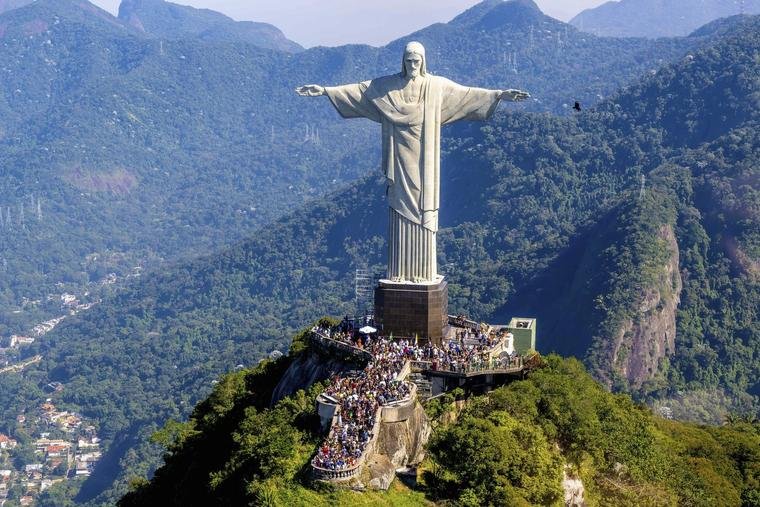
The first thing to understand about Christ the Redeemer is its relationship with the mountain. The statue itself is 30 metres tall, but Corcovado lifts it high above Rio de Janeiro. From the streets below, those outstretched arms seem to belong to the skyline. At the summit, the relationship reverses: the city becomes the spectacle, spreading between wooded slopes, water, and densely built neighbourhoods.
Known in Portuguese as Cristo Redentor, the monument depicts Jesus Christ with his arms extended. It is a place of Catholic devotion, a major visitor attraction, and an image through which much of the world recognises Brazil. These roles overlap, but each offers a different way to understand the site. [1]
A rewarding visit begins before the photograph. Knowing why the monument was built, how its enormous figure was assembled, and what the surrounding forest represents gives the journey up Corcovado much more substance.
Where Christ the Redeemer stands
Christ the Redeemer stands atop Corcovado in Rio de Janeiro, Brazil, within Tijuca National Park. The mountain rises roughly 710 metres above sea level. The difference between that elevation and the sculpture's height explains why descriptions of the monument sometimes seem inconsistent: one measurement describes the mountain, while another describes the structure on top. [2, 3]
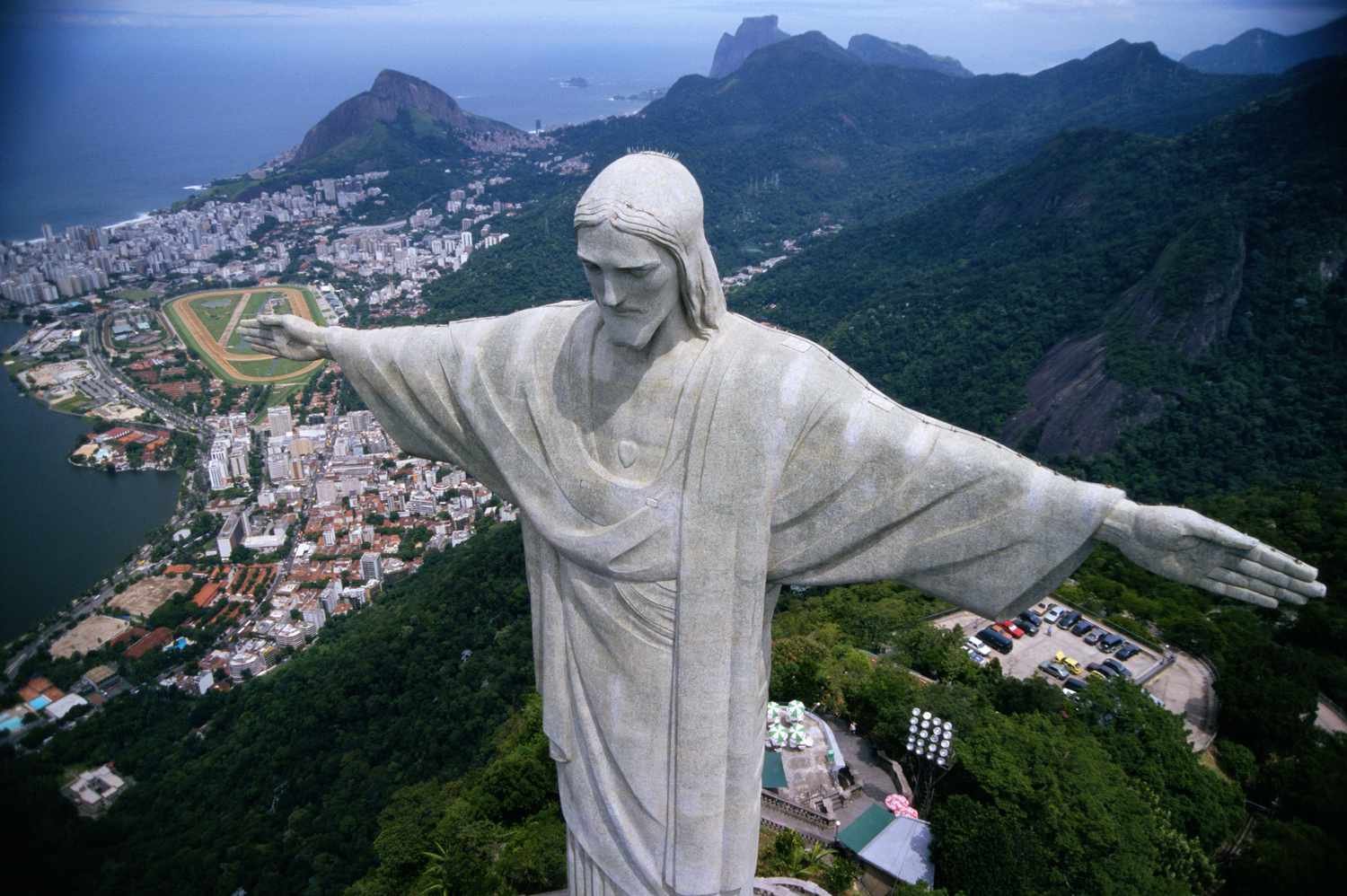
Its position lets viewers see the statue from many parts of Rio, though buildings, hills, and weather interrupt the view. From the viewing terraces, clear conditions reveal the curves of Guanabara Bay and the city’s coastal geography. The view clarifies Rio in a way a street map rarely can. Neighbourhoods occupy narrow spaces between slopes, and green mountain ridges divide areas that may appear close together on paper.
Corcovado and Sugarloaf are different mountains. Christ the Redeemer stands on Corcovado; the famous cable car attraction serves Sugarloaf. Visitors often include both in a Rio itinerary, but they require separate journeys and separate arrangements.
The idea before the statue
The monument’s origins date back to the nineteenth century. The sanctuary’s history traces an early proposal for a religious monument to the French priest Pierre Marie Boss, who looked toward Corcovado from Botafogo. The idea did not immediately become a building project. Decades separated the early vision from the organisation, fundraising, and technical work needed to realise it. [4]
Momentum grew in the early 1920s, around the 1922 centenary of Brazilian independence. Catholic supporters promoted a major public expression of Christian faith, and proposals for the monument developed within that setting. Brazil’s National Library historical collection documents the campaign and the people who pressed for the project. [2]
This background matters because the statue was created for a specific religious and national moment. Its later role as an international symbol of welcome grew from that original purpose. Describing it only as a tourist landmark leaves out the community that wanted it built and the devotion that continues there.
Who created Christ the Redeemer
Several people contributed to the monument, and assigning the entire work to a single designer oversimplifies its history.
Brazilian engineer Heitor da Silva Costa led the project. Painter Carlos Oswald helped develop the image, including the recognisable composition with extended arms. French sculptor Paul Landowski shaped the sculptural design, while engineer Albert Caquot developed the internal reinforced concrete structure. The sanctuary also acknowledges Heitor Levy and Pedro Fernandes Viana for bringing the project to life. [4, 5]
Landowski’s surviving models and drawings are especially useful for understanding the transition from an idea to a monumental figure. The Paul Landowski Collection describes a four-metre model and full-size work on the head and hands in his French studio. These studies guided the enlargement and execution in Brazil. [5]
Romanian sculptor Gheorghe Leonida is also credited with work on the face in the New7Wonders account. His contribution belongs within this broader collaboration. [1]
The result was a Brazilian commission realised through an exchange of artistic and engineering expertise across countries. Looking closely at the monument, you can appreciate both kinds of work: the careful control of the figure’s expression and the structural challenge of holding its arms horizontally above an exposed summit.
Construction and the inauguration in 1931
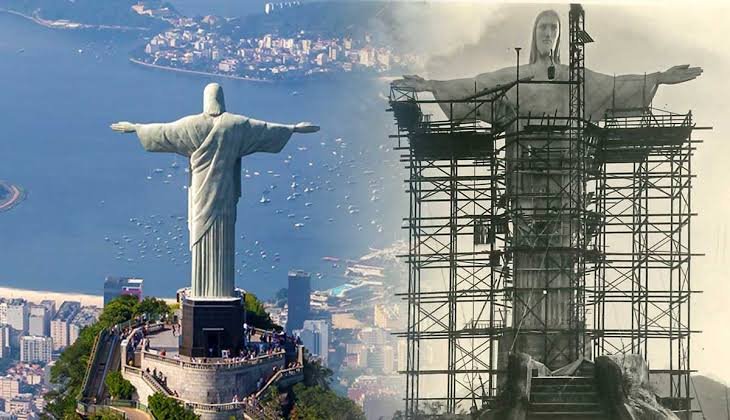
The project took shape through several stages. Early planning and the independence centenary explain why some timelines begin in 1922. Rio’s municipal historical account dates the main construction campaign from 1926 to 1931. These dates describe different phases rather than two incompatible stories. [6]
Christ the Redeemer was inaugurated on 12 October 1931. The dedication brought together religious and public figures, including Cardinal Sebastião Leme and Getúlio Vargas, then head of Brazil’s provisional government. [5]
Building at the summit meant treating transport and assembly as essential parts of the design. The mountain already had a railway: the sanctuary opened in 1884, long before the statue was completed. That history reminds a that Corcovado was already a destination when the monument transformed its profile. [4]
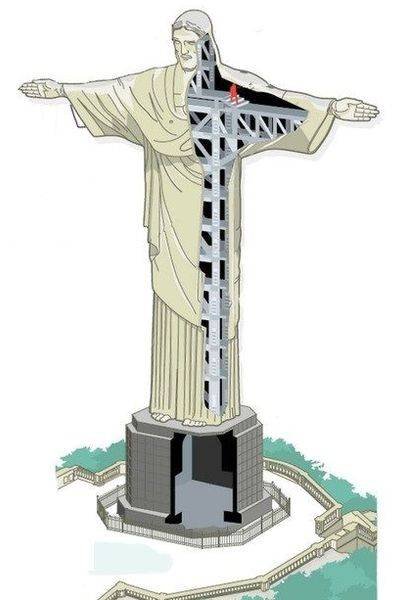
The construction story also corrects a common visual assumption. Christ the Redeemer was not carved from one enormous block of stone. Its appearance depends on a structural core and an exterior covering, made and assembled through many separate operations.
Height and proportions
The main measurements are straightforward. The figure is 30 metres high, the pedestal adds approximately eight metres, and the arms extend about 28 metres from one side to the other. Together, the statue and pedestal reach roughly 38 metres. Brazil’s mineral technology research institute records these dimensions in its work on the stone used for restoration. [7]
These numbers help explain the monument’s proportions, but they do not fully describe its presence. Seen from a distance, its long vertical body and strong horizontal arms create an exceptionally clear outline. Up close, the head seems high overhead, and the hands extend well beyond the central mass.
Its fame does not depend on holding a current height record. Comparisons with other statues can be misleading when one source includes a pedestal and another measures only the figure. Christ the Redeemer is best understood through its particular combination of design, elevation, and setting.
The Art Deco design
Christ the Redeemer is generally classified as an Art Deco sculpture. Its broad surfaces, controlled geometry, and simplified robe fit that description. Rather than filling the silhouette with elaborate movement, the design gives the figure a stable, almost architectural character. [1]
The garment's long folds draw the eye upward. The extended arms balance the composition, while the slightly lowered head gives the figure a contemplative expression. Visitors can test these observations from different positions around the platform.
Distance is central to the design. A monument placed so far above its viewers needs an outline that remains legible when fine detail disappears. The strong cross-like arrangement achieves that, making the figure recognisable even when light or cloud reduces it to a pale shape against the mountain.
Reinforced concrete beneath a soapstone surface
The monument has a reinforced concrete structure covered with soapstone mosaic. The concrete provides the structure; the small stone pieces form the visible surface. [1, 7]
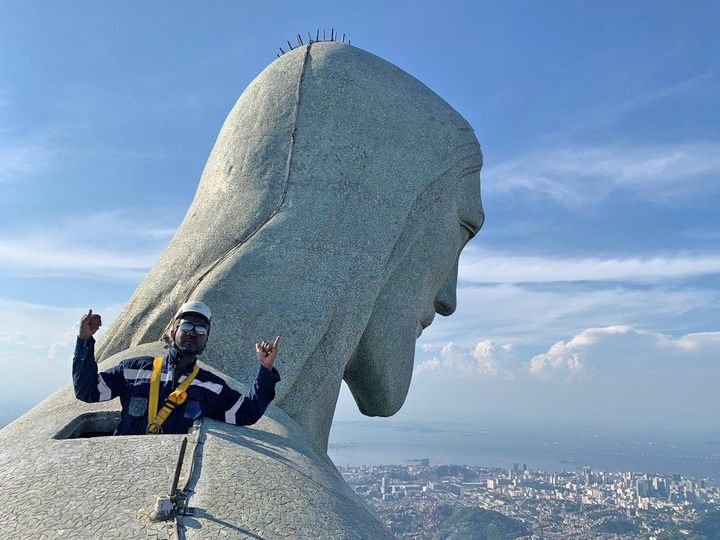
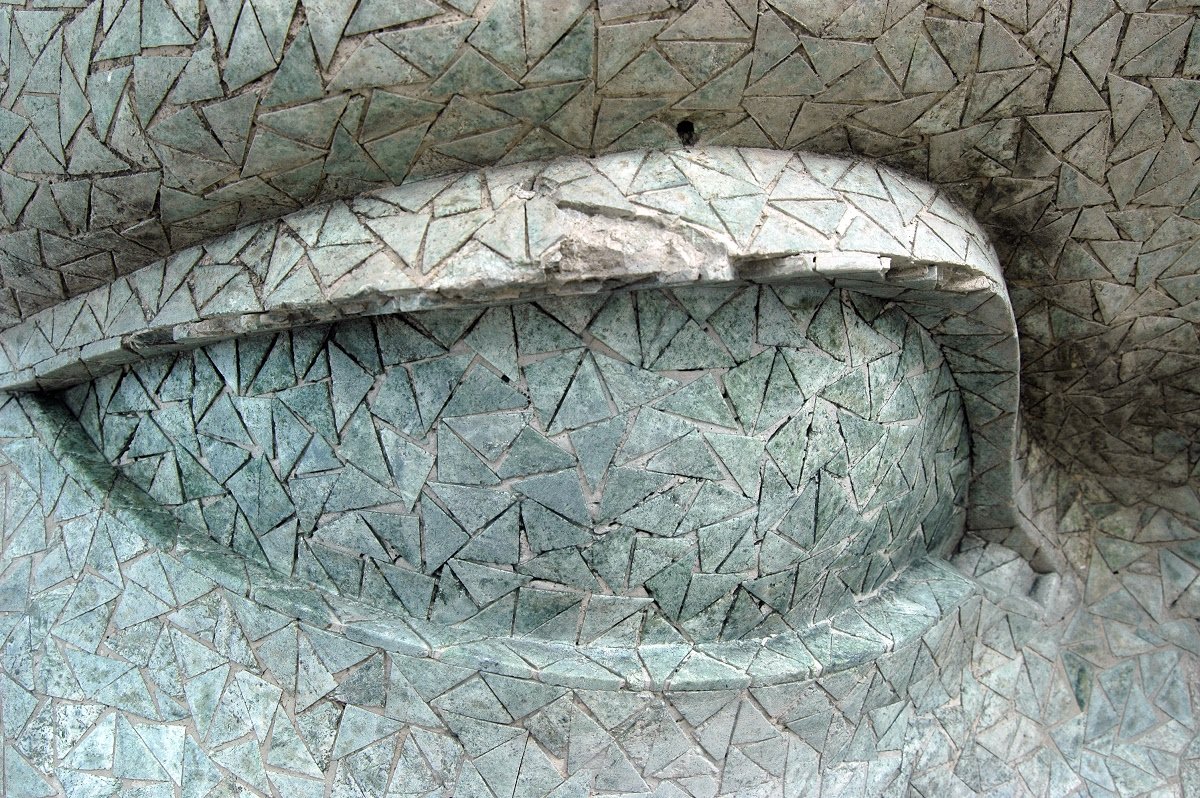
Soapstone, also known as steatite, gives the exterior a subtle texture. From the city below, the surface appears almost continuous. Closer inspection reveals the many small pieces that follow the curves of the robe and features.
The sanctuary describes triangular pieces attached to fabric before workers applied them to the monument. It also preserves the story of women placing loved ones’ names on the backs of some pieces during their preparation. Such accounts connect the enormous public structure to acts carried out by individual hands. [4]
The choice of a mosaic covering also affects conservation. Repairs must address damaged stone, the joints between pieces, and the condition of the material beneath. A monument can look solid from a distance while requiring detailed inspection at the scale of a small tile.
What the open arms mean
For Christians, the statue represents Christ the Redeemer, expressing faith in Jesus and redemption. Its extended arms also invite an interpretation of welcome and protection over the city. New7Wonders associated the monument with openness when discussing the values its selected landmarks represent. [8]
The form allows viewers to approach it with different expectations. A pilgrim may arrive to pray. An architecture enthusiast may study the figure’s proportions. Someone visiting Rio for the first time may be most interested in the panorama. None of these experiences requires pretending that the religious meaning has disappeared.
Brazil is religiously diverse, and one Christian monument cannot represent every resident’s beliefs. Its importance as a national image exists alongside that diversity. A thoughtful account can acknowledge the Catholic origin while recognising how widely the silhouette circulates in Brazilian public life
An active sanctuary
The religious life of Christ the Redeemer continues beyond its history of construction. The site became a sanctuary in 2006 and holds Mass and other religious celebrations. Visitors interested in worship should use its own information channels rather than assuming that a sightseeing ticket guarantees attendance at a particular service. [9, 10]
This is an important part of visitor etiquette. A busy observation terrace and a place of prayer can occupy the same destination. Keep conversations respectful near services, follow staff instructions, and avoid treating worshippers as part of a photo opportunity.
You don't need to share the faith represented by the statue to appreciate the site. Respectful curiosity is enough. Understanding that ceremonies still take place helps explain why behaviour appropriate at an ordinary lookout may not suit every part of the sanctuary.
New7Wonders and UNESCO recognition
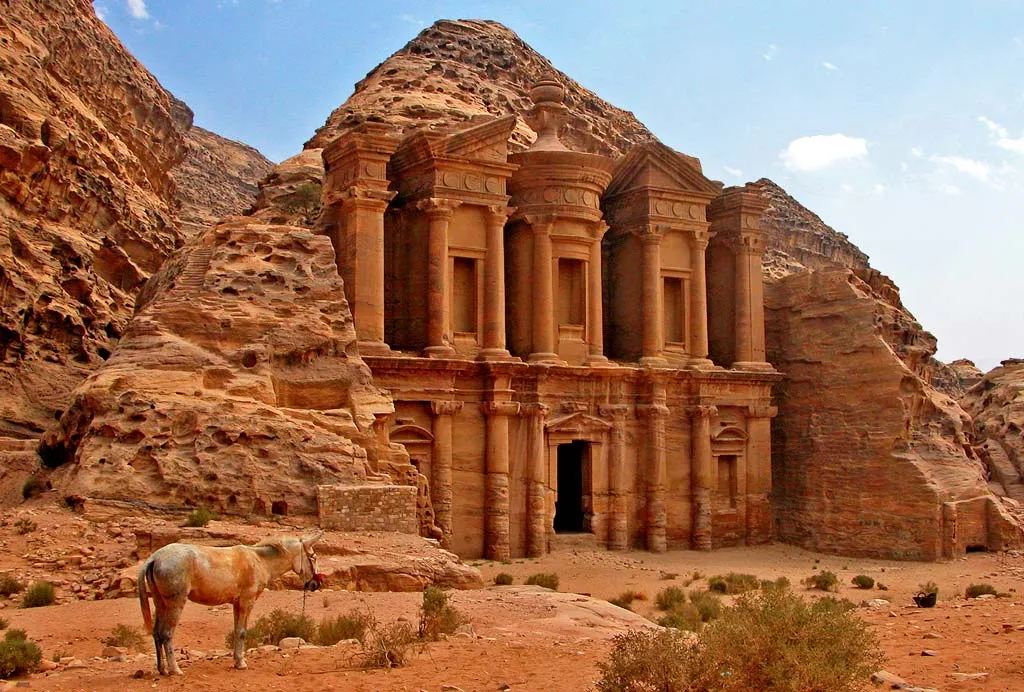
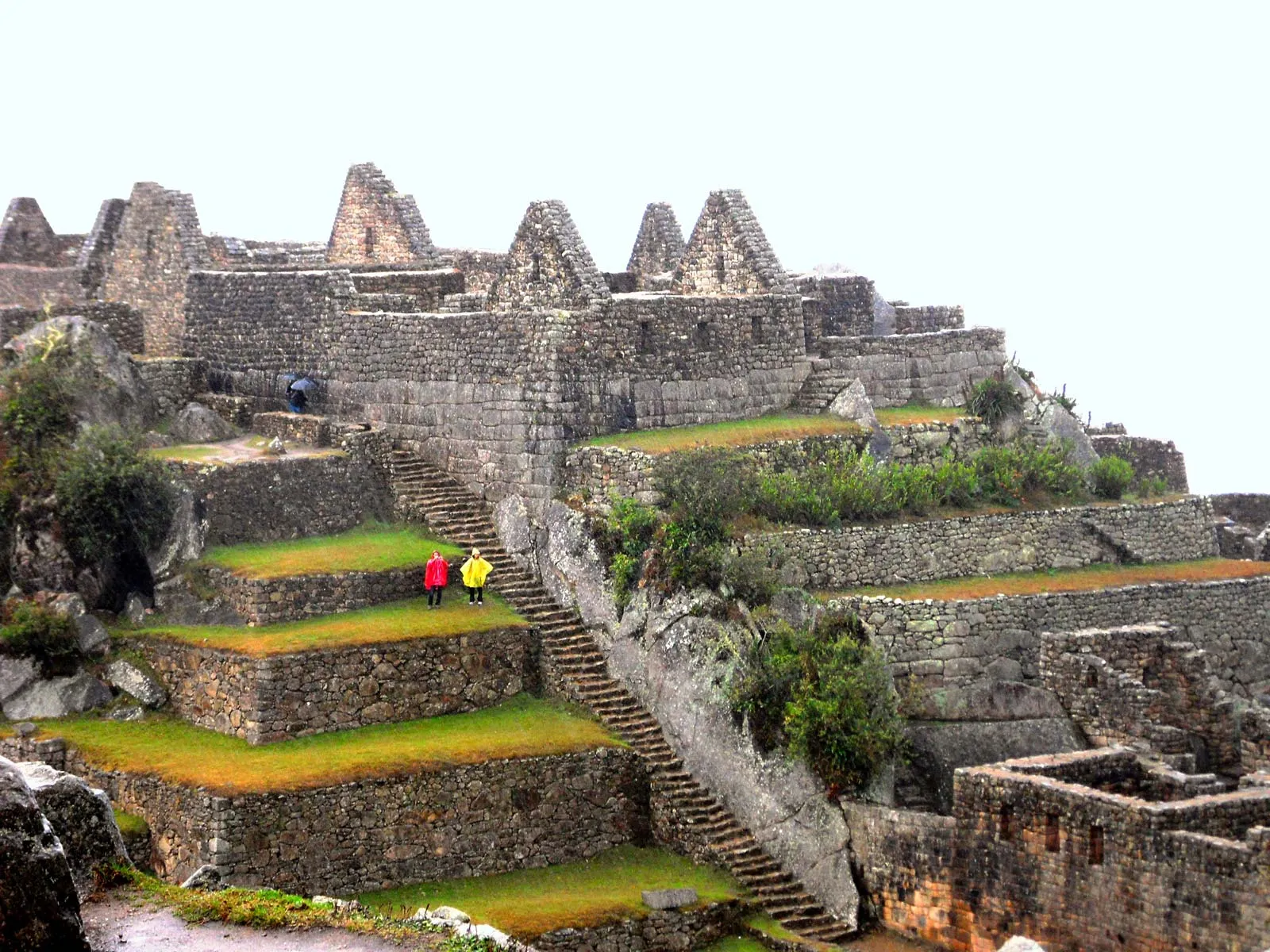
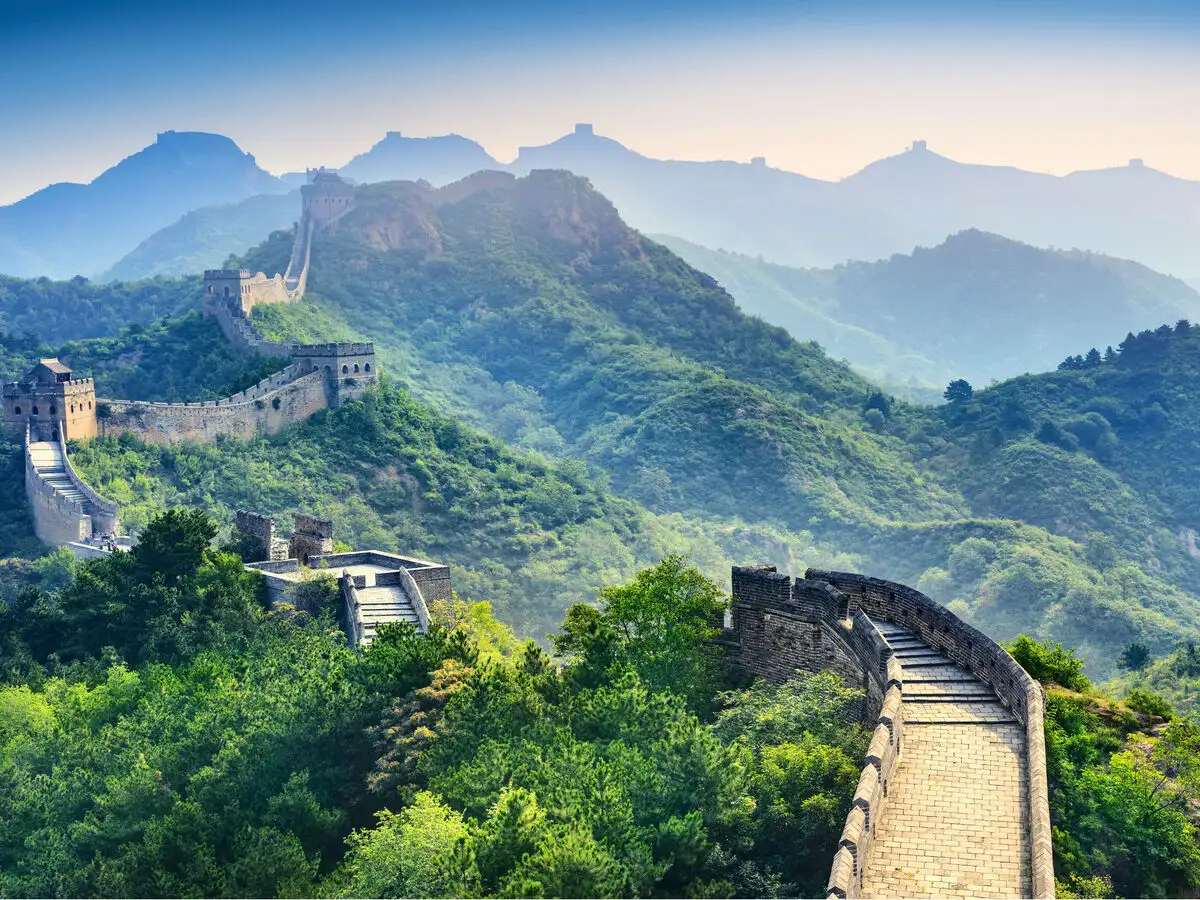
Christ the Redeemer was selected in the New7Wonders global voting campaign, whose results were announced on 7 July 2007. The other selected landmarks were the Great Wall of China, Petra, the Colosseum, Chichén Itzá, Machu Picchu, and the Taj Mahal. [11]
This was a modern public voting initiative. It should not be described as membership in the ancient Seven Wonders or as a UNESCO award.
UNESCO recognition relates to the wider property called Rio de Janeiro Carioca Landscapes between the Mountain and the Sea, inscribed in 2012. Its significance lies in the relationship between the city and its dramatic natural setting, including forested mountains and coastal landscapes. Corcovado belongs to that larger geographical and cultural context. [12]
The distinction helps explain two different forms of recognition. The New7Wonders campaign drew worldwide attention to a particular monument. The UNESCO listing asks people to understand a landscape and the ways human activity has shaped it.
The forest around Corcovado
The trees below the statue are part of the experience, and their history deserves attention. Tijuca’s wooded landscape includes areas affected by agriculture and later reforestation. The national park’s history describes the nineteenth-century restoration effort, with official protection and replanting associated with 1861. [13]
Brazil’s National Archives records the creation of forest administration arrangements that year and the instructions governing planting and conservation. The forest visitors see today therefore includes a history of deliberate repair, alongside its ecological value. [14]
That changes the meaning of the journey uphill. The greenery is not simply a scenic border around a famous statue. It reflects decisions about land, water, and the relationship between a growing city and its surroundings.
Stay on authorised routes and observe wildlife without feeding it. Even a short sightseeing visit takes place within a protected area, where small visitor actions can affect animals and vegetation.
Restoration and exposure to the weather
A statue on an exposed mountain receives rain, wind, lightning, and sunlight. Its setting creates the view that visitors admire, but it also creates an ongoing maintenance burden.
Rio’s municipal government documented a substantial restoration completed in 2010, including replacing missing soapstone mosaics, cleaning, repairing joints, and addressing water inside the arms. [15]
Further repairs followed lightning damage in 2014. The sanctuary’s account describes work on the stone covering and improvements to lightning protection. These interventions show that preservation includes systems most visitors will never notice. [16]
A good restoration must protect the structure while respecting its appearance. The challenge is to keep the monument recognisable without assuming that its materials can remain untouched indefinitely. Occasional maintenance equipment or restricted areas are part of caring for a working historic site.
Choosing how to reach the monument
The two best-known official transport choices are the Corcovado train and the Paineiras Corcovado vans. Select the route before buying, because the departure point, transport arrangement, and ticket conditions shape the whole outing. [3]
The Corcovado train
The train departs from Cosme Velho. Its official booking system offers a package that includes round-trip rail travel and access to Christ the Redeemer. Check the selected date, departure time, and passenger category when reserving. [17]
This option suits visitors who want the railway journey to be part of the experience. Allow additional time to reach the station from your accommodation. A map showing a short distance through Rio does not account for traffic or the city’s winding routes around hills.
The official vans
Paineiras Corcovado offers official van services, with boarding options including Copacabana, Largo do Machado, and the Paineiras Visitor Center. Its published arrangements include return transport from the purchased departure point and admission to the monument. [18]
Choose the starting point that makes sense for your accommodation and return plans. Arriving independently at Paineiras does not mean a taxi or private car will carry you onto the summit platform.
Walking routes
The park also recognises access on foot and services provided by authorised visitor conductors. Ask the park about current route conditions and admission arrangements before planning a walk. Hiking requires a separate assessment of terrain, weather, time, and personal fitness; don't treat it as a casual substitute for the transport journey. [3]
Tickets and planning your time
Ticket prices vary by transport product, date, boarding point, and eligibility category. Use the official train or van booking page to calculate the actual cost for your group. Check which documents are required for any concession before paying. [17, 18]
Also distinguish the boarding time from the time you expect to stand beside the statue. A reserved departure does not eliminate travel time, queues, or the final movement through the site.
As a planning recommendation, allow several hours for the full outing rather than scheduling only a brief photo stop. Your journey from the hotel, waiting time, sightseeing, and return trip all need space. If a flight or other fixed appointment follows, leave a generous buffer.
Opening arrangements can change because of weather, works, or operations. Confirm the last return departure as carefully as the first available entry. A sunset plan is only practical when it fits the service schedule for your date.
Accessibility and the current access works
Visitor update checked on 12 October 2026: Tijuca National Park reports that escalator replacement began on 3 August 2026, with work expected to continue until the end of May 2027. The monument remains open, but simultaneous visitor capacity is reduced by 50 per cent. [19]
The park distinguishes the full 220-step stone route from the final 80 steps above the second level. Existing lifts serve the lower section; during the works, visitors must use stairs or available assisted stair-climbing equipment for the final section. The equipment has wheelchair and weight restrictions and does not operate in rain or on wet surfaces. [19]
Visitors with limited mobility should contact the operator before buying to confirm suitable assistance and current conditions. Do not rely on older descriptions promising uninterrupted escalator access. Recheck this notice near your travel date because works and assistance arrangements may change.
Weather and choosing a visiting time
Visibility is one of the biggest factors in your visit. Clear conditions reveal the city’s coastline and mountains; low cloud may hide both the panorama and parts of the statue. Weather at the summit can differ from what you see outside your hotel. Paineiras explicitly notes that changing conditions affect visibility. [18]
If possible, give yourself more than one potential day in Rio for the excursion. Check the forecast and the mountain itself before committing to a rigid sightseeing sequence, and keep the ticket’s change rules in mind.
Choose a time based on your priorities. Someone seeking a quieter experience may prefer a less busy slot; a photographer may care more about light direction. No hour guarantees clear skies, an empty terrace, and perfect lighting all at once.
Wear shoes with reliable grip, bring water, and carry a light layer if the conditions call for it. Keep luggage small enough to manage comfortably in queues and on stairs.
Taking photographs without missing the visit
The classic photograph places the statue above the visitor, often with the visitor’s arms extended to echo the sculpture. It is an understandable choice, but the confined platform makes it important to be considerate. Take your shot promptly and move aside for others.
Try a few different compositions. A vertical image can emphasise the robe and head. A wider photograph can show the monument's relationship to the city. Surface details reveal something absent from distant postcard views.
Avoid blocking access routes or leaning beyond barriers. A photograph is never improved by making the platform harder for other visitors to use. For commercial filming, organised shoots, or other special production, confirm the required authorisations rather than assuming a normal admission ticket covers them. [18]
Then put the camera away for a few minutes. Follow the lines of the hills toward the water and look at how the city occupies the spaces between them. That view best explains why the monument belongs here.
Building a balanced Rio itinerary
Christ the Redeemer works well as the main activity in a morning or afternoon, with the remainder left flexible. Resist the temptation to fill every spare hour before you know how long transfers and queues will take.
If you also want to see Sugarloaf, allow for the journey between the attractions and book each separately. Comparing the two perspectives can be rewarding: Corcovado offers a high overview of the city, while Sugarloaf provides another relationship with the bay and coast. Check each attraction’s current operating information independently.
A quieter alternative is to follow the mountain visit with an unhurried meal or time in the neighbourhood around your accommodation. Leaving room in the day helps you absorb what you have seen instead of treating the city as a list of photographs to collect.
What stays with you after the visit
Most visitors are familiar with Christ the Redeemer before they ever reach Brazil. Yet its scale, surface, and setting reveal details the familiar image omits. The distance between the terrace and the face, the spread of the hands, and the surprising amount of forest beneath a monument associated with a large city stand out.
Its story becomes more interesting when you restore the names behind it: the campaigners, artists, engineers, and workers whose separate efforts made the figure possible. Looking up at the statue, then out over Rio, brings their work into focus. The monument gives the skyline a recognisable form; the mountain and the city give that form its meaning.
Frequently Asked Questions
Where is Christ the Redeemer located?
Christ the Redeemer stands on Corcovado Mountain in Rio de Janeiro, Brazil, within Tijuca National Park. It is a separate destination from Sugarloaf Mountain. [3]
How tall is Christ the Redeemer?
The figure is 30 metres tall. Its pedestal adds about eight metres, giving a combined height of approximately 38 metres. The arms span roughly 28 metres. [7]
When was Christ the Redeemer built?
The project developed in the early 1920s, with the main construction campaign generally dated from 1926 to 1931. The inauguration took place on 12 October 1931. [5, 6]
Who designed Christ the Redeemer?
Heitor da Silva Costa led the project, Carlos Oswald contributed to its visual development, Paul Landowski created the sculptural design, and Albert Caquot worked on the concrete structure. Other contributors included Gheorghe Leonida, who worked on the face. [1, 4, 5]
What is the statue made of?
Christ the Redeemer has a reinforced concrete structure covered with soapstone mosaic. It was assembled as a constructed monument rather than carved from a single block. [1, 7]
Why are the arms extended?
The pose gives the figure a cross-like outline and is commonly understood as an expression of welcome. Its underlying religious meaning is Christ the Redeemer in Christian belief. [8]
Is it one of the Seven Wonders of the World?
It is one of the New7Wonders selected in a global voting campaign announced in 2007. This recognition is separate from the ancient Seven Wonders and from Rio’s UNESCO cultural landscape listing. [11, 12]
Should I take the train or a van?
Choose according to your preferred journey and departure point. The train leaves from Cosme Velho; official vans offer several boarding options. Read the transport and admission inclusions before buying either product. [3, 17, 18]
Is Christ the Redeemer accessible for wheelchair users?
Assistance is available, but ongoing work affects the final approach. Confirm equipment suitability, operational status, and weather limitations directly before booking. The accessibility section above explains the park’s October 2026 guidance. [19]
How much time should I allow for the visit?
Keep several hours available for the outing, including travel from your accommodation, boarding, the summit visit, and your return. This is a planning allowance, not an official visit duration; queues, traffic, weather, and mobility needs can change the timing.
Sources and editorial notes
Research checked on 12 October 2026. Numbered references support the article’s factual claims. Travel timing and itinerary suggestions are editorial recommendations. Check operational details again before publication or travel, particularly the access works notice. Meta keywords are supplied as requested; they should not be treated as a Google ranking strategy.
[1] New7Wonders. Cristo Redentor. Design credits, materials, dimensions, and recognition.
https://world.new7wonders.com/wonders/cristo-redentor-1931-rio-de-janeiro-brazil/
[2] Brasiliana Fotográfica, Biblioteca Nacional. Historical collection on Cristo Redentor.
https://brasilianafotografica.bn.gov.br/?tag=cristo-redentor
[3] Tijuca National Park. Como visitar o Corcovado. Official access routes and operator links.
https://parquenacionaldatijuca.rio/como-visitar-o-corcovado/
[4] Sanctuary of Christ the Redeemer. History in 1 Click. Early proposal, railway, contributors, and mosaic work.
https://en.santuariocristoredentor.com.br/a-historia-em-um-clique
[5] Paul Landowski Collection. Christ the Redeemer, Paul Landowski. Google Arts and Culture exhibition.
https://artsandculture.google.com/story/FAWBuAa4ZltQLQ?hl=en
[6] Rio de Janeiro municipal historical archive. Rio um olhar no tempo. Construction chronology.
https://www0.rio.rj.gov.br/rio_memoria/2011_texto.htm
[7] CETEM. Technological characterisation of soapstone for the restoration of Christ the Redeemer, in CETEM 35 anos criatividade e inovação.
https://mineralis.cetem.gov.br/bitstream/cetem/1507/4/cetem_35_anos-criatividade_e_inovacao.pdf
[8] New7Wonders. The 7 Virtues of Humankind. Interpretation of openness.
https://about.new7wonders.com/2007/12/19/the-7-virtues-of-humankind/
[9] Sanctuary of Christ the Redeemer. Historical timeline including sanctuary status in 2006.
https://www.en.santuariocristoredentor.com.br/a-historia-em-um-clique
[10] Sanctuary of Christ the Redeemer. Mass Request.
https://en.santuariocristoredentor.com.br/missas
[11] New7Wonders. Declaration of the New7Wonders of the World on 7 July 2007.
https://world.new7wonders.com/lisbon-on-07-07-2007/
[12] UNESCO World Heritage Centre. Rio de Janeiro Carioca Landscapes between the Mountain and the Sea.
https://whc.unesco.org/en/list/1100/
[13] Tijuca National Park. History of the park and reforestation.
https://parquenacionaldatijuca.rio/historia-do-parque-nacional-da-tijuca/
[14] Arquivo Nacional. Administração da Floresta da Tijuca.
https://www.gov.br/arquivonacional/pt-br/sites_eventos/sites-tematicos-1/brasil-oitocentista/conheca-o-acervo/administracao-da-floresta-da-tijuca
[15] Rio de Janeiro municipal government. Completion of the 2010 restoration.
https://www.rio.rj.gov.br/web/guest/exibeconteudo?id=918026
[16] Sanctuary of Christ the Redeemer. Christ the Redeemer restored and more protected, 11 July 2014.
https://en.staging.santuariocristoredentor.com.br/noticias/christ-the-redeemer-restored-and-more-protected
[17] Trem do Corcovado. Official tickets and journey information.
https://www.tremdocorcovado.rio/en
[18] Paineiras Corcovado. Official frequently asked questions and ticket links.
https://www.paineirascorcovado.com.br/duvidas/
[19] Tijuca National Park. Escalator replacement and accessibility arrangements, notice dated 3 August 2026.
https://parquenacionaldatijuca.rio/saiba-tudo-sobre-a-troca-das-escadas-rolantes-do-cristo-redentor/